I have a lot of resistance when it comes to my blog – a lot of that is caused by the increasing sophistication and assistance offered by the various platforms I use. Stop the bus! I want to get off where I feel I can manage a simple and straightforward newsletter or blogpost without being pushed into using AI. I will use my own words thank you. And my own artwork – and I will choose where it gets placed on the page even if it is not snazzy and sticky and all of that stuff. My brain is tired – I yearn for the simplicity of Word circa 2000. Cut and paste, text boxes, choose your font etc…
I started this post in November 2024. Most of 2025 can be erased – including flooding in February! We moved to a higher, drier location in September and only now am getting back into the ‘studio’. In reality a bedroom I’m scared to make a mess in!
Let’s see if the Year of the Fire Horse has any impact on my art life!!
Change is afoot – we have relocated to Gaborone, Gabz, GC. Not an easy transition – think of velcro firmly enmeshed, then trying to peel it open without too much noise. I have been slowly bringing things to Gabs for the last 6 months and now have a bright spare room for painting and wall space for hanging pictures. I had an energetic burst of painting and decorating (green seems to be a recurring theme with me), bought far too much paint and feel obliged to use it throughout. I like it but others may get queasy.
Anyway – to studio stuff. I’m trying a new way of stretching paper. I love Arches gummed blocks but I am very wishy washy with paint so the paper buckles. I can’t remember the artist who did this but you soak the paper, and paste it at the edges onto boards cut to size. He prepared a few at a time, separated them with newsprint and they dried out slowly staying taut and flat for subsequent painting. One day the name will come to me – in the meantime I am happy with the result!
First wash on stretched HP Arches.
I’ll be posting on FB and Instagram when it’s done!
Actually, no need of a fanfare. There are bound to be new paintings since the last time I posted. It is more of an annual event than a blog post.
Anyway- I have managed more than a couple since I tidied my studio in 2021.
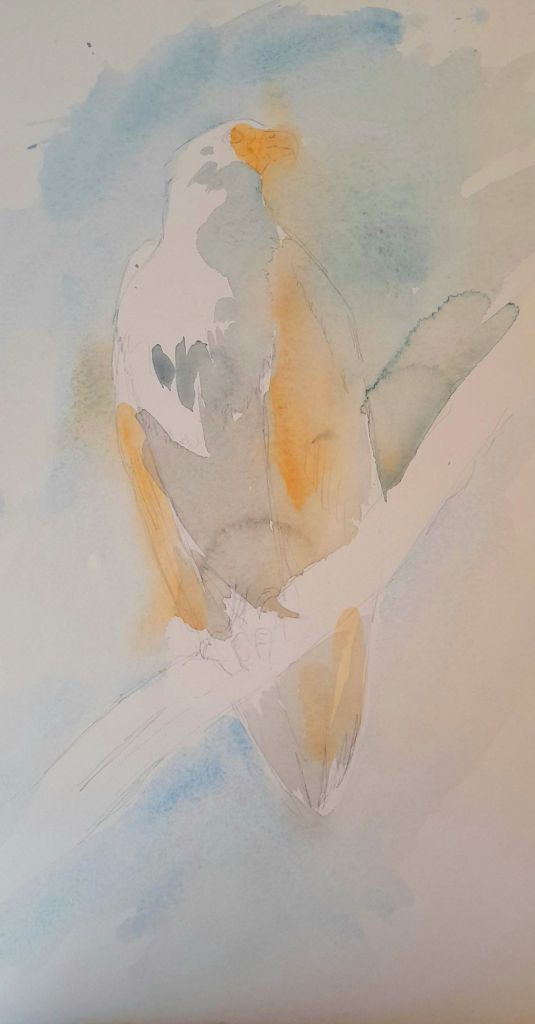
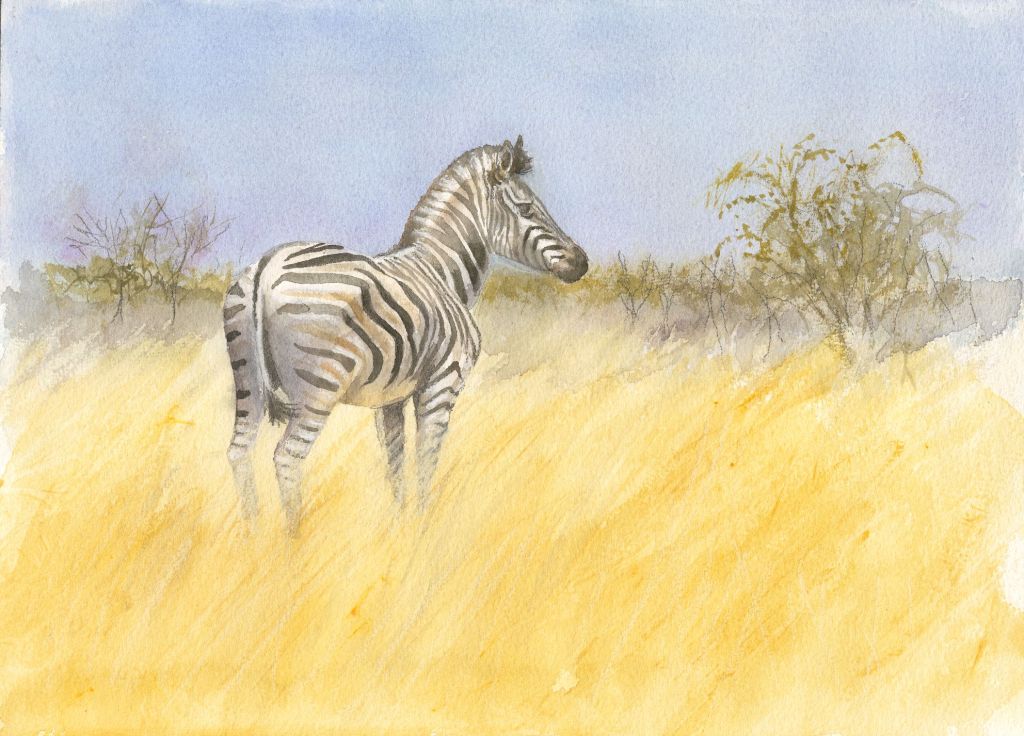
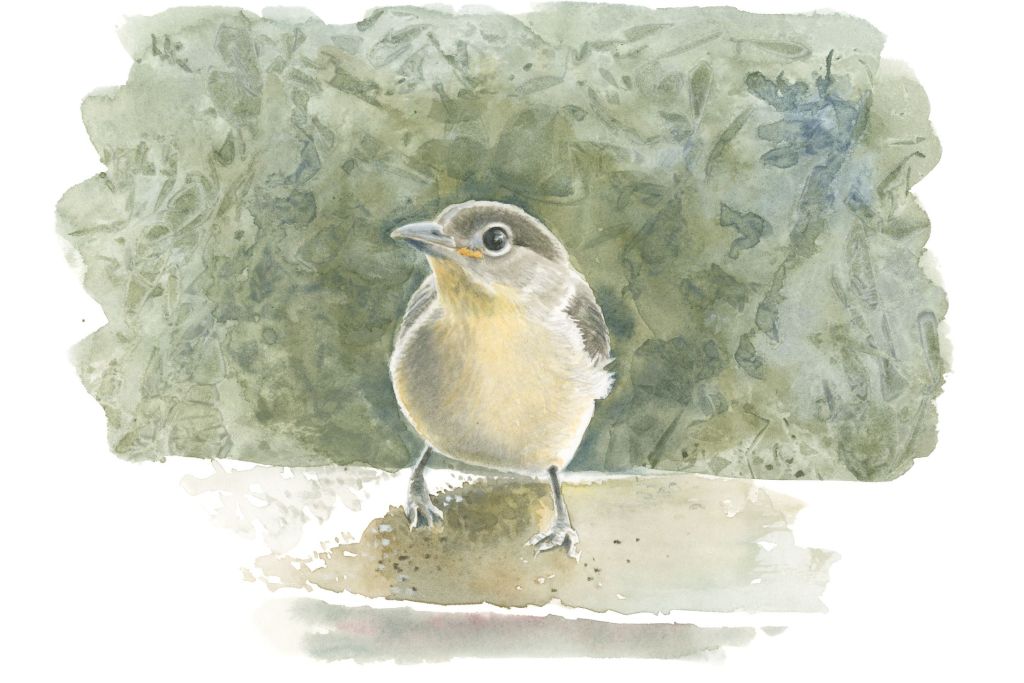
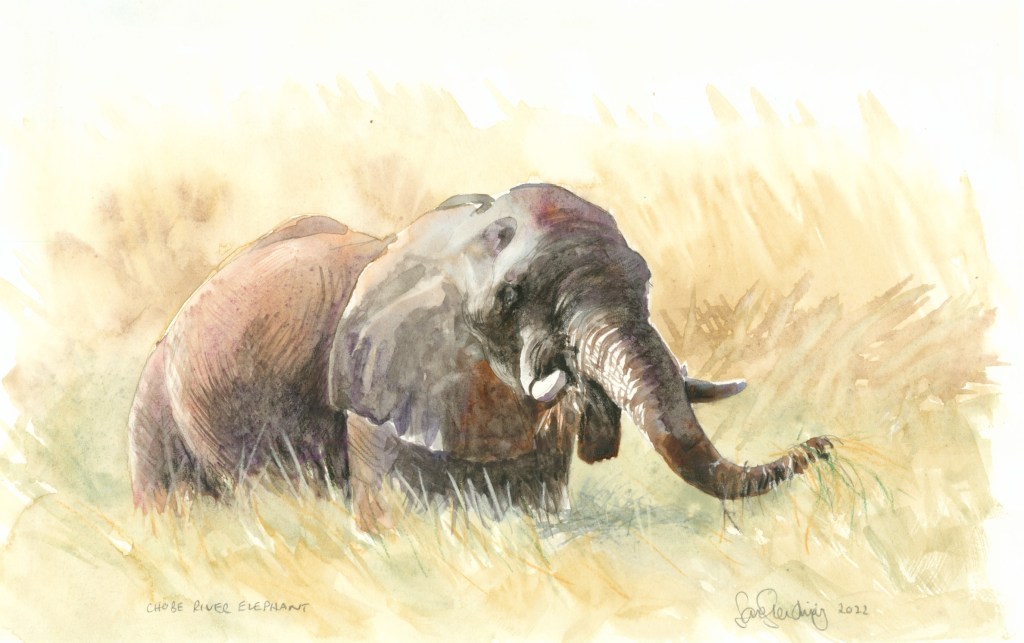
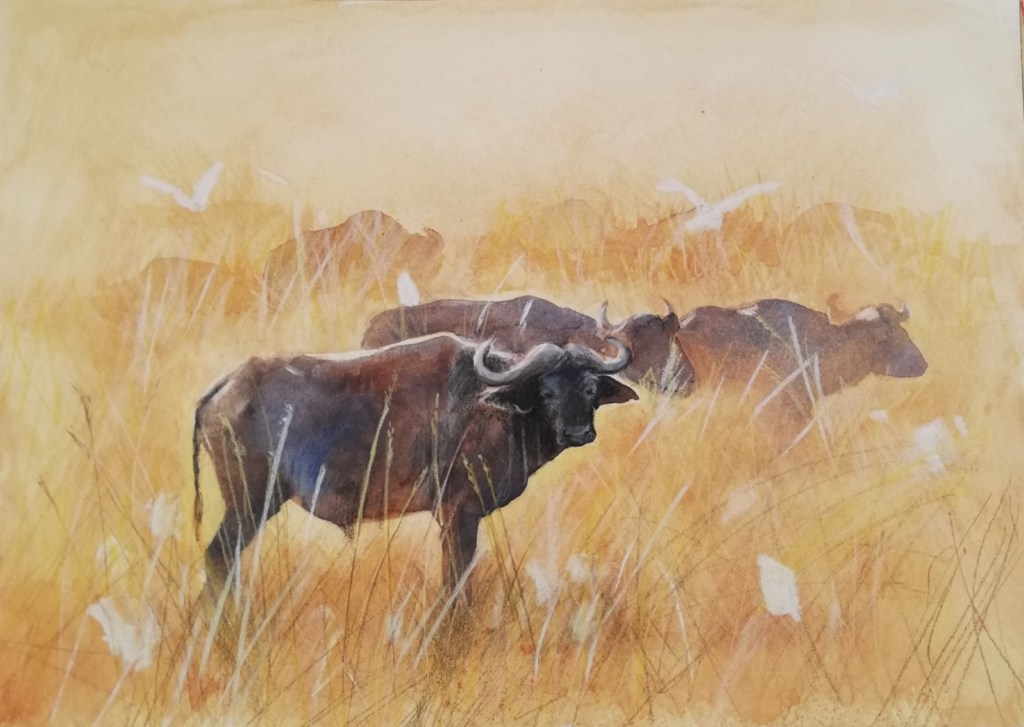
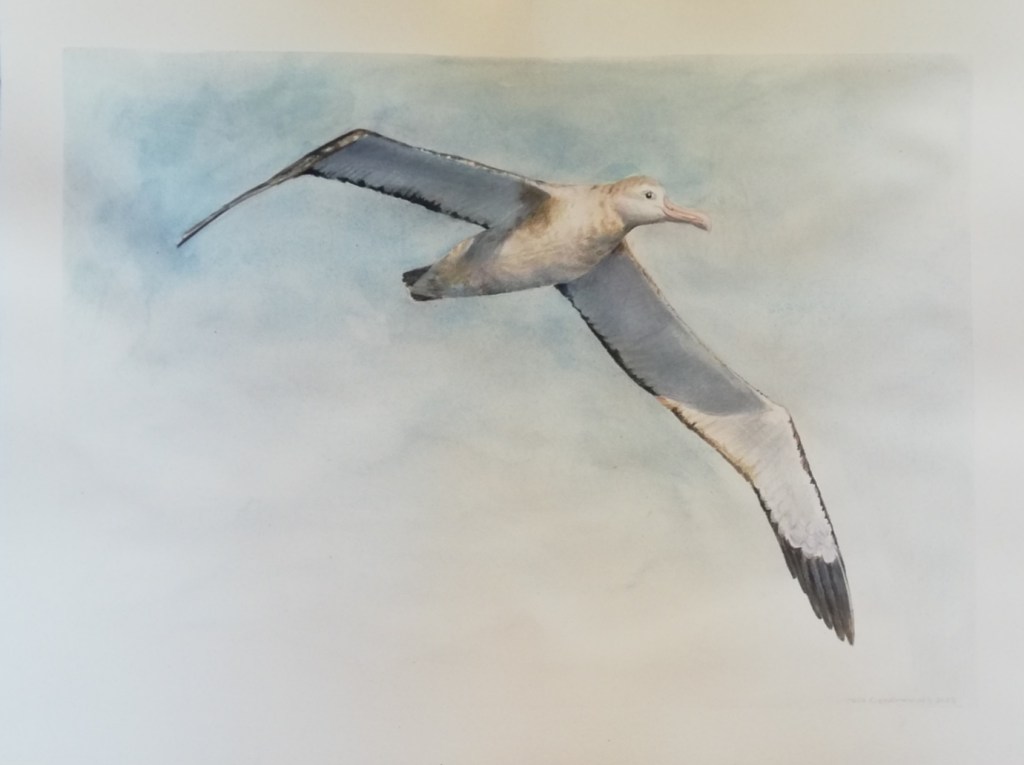
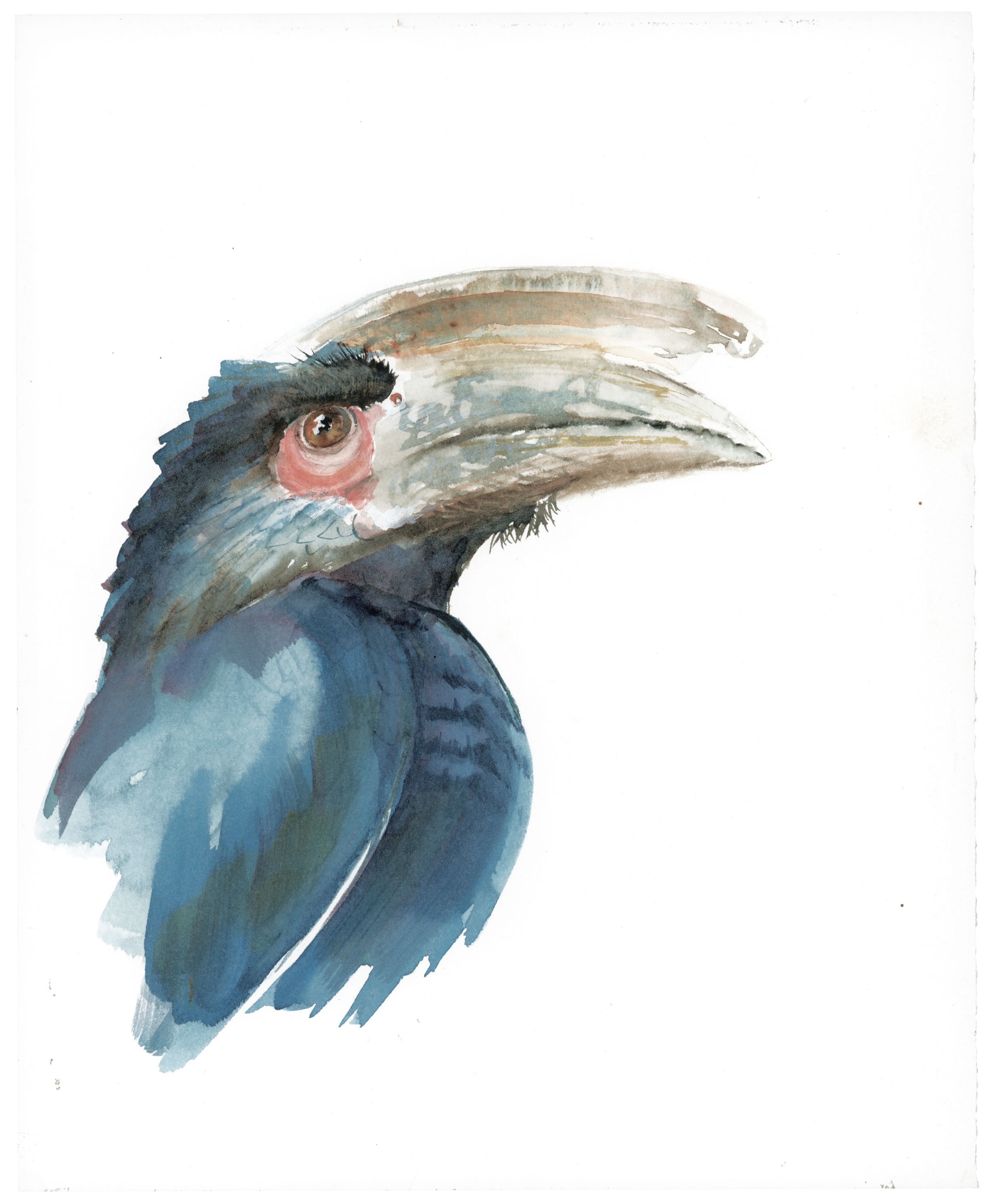
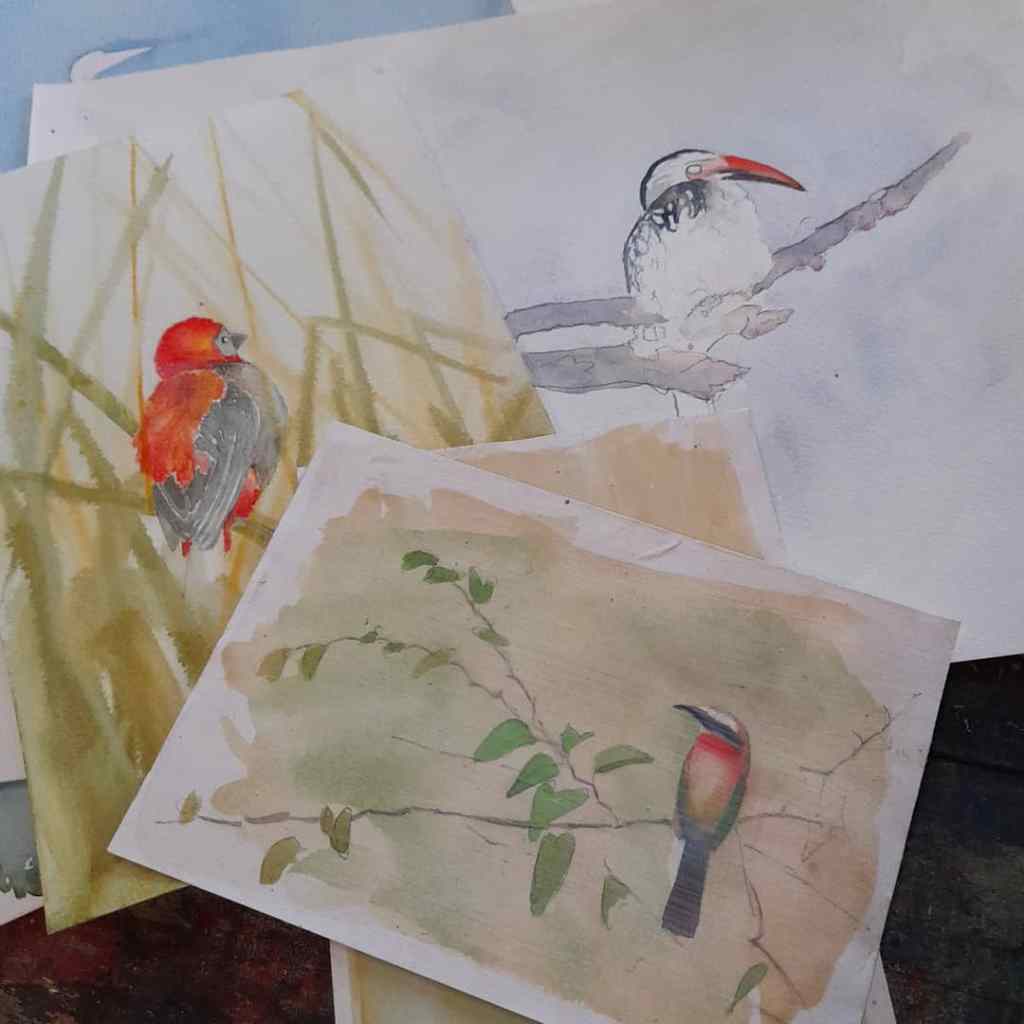
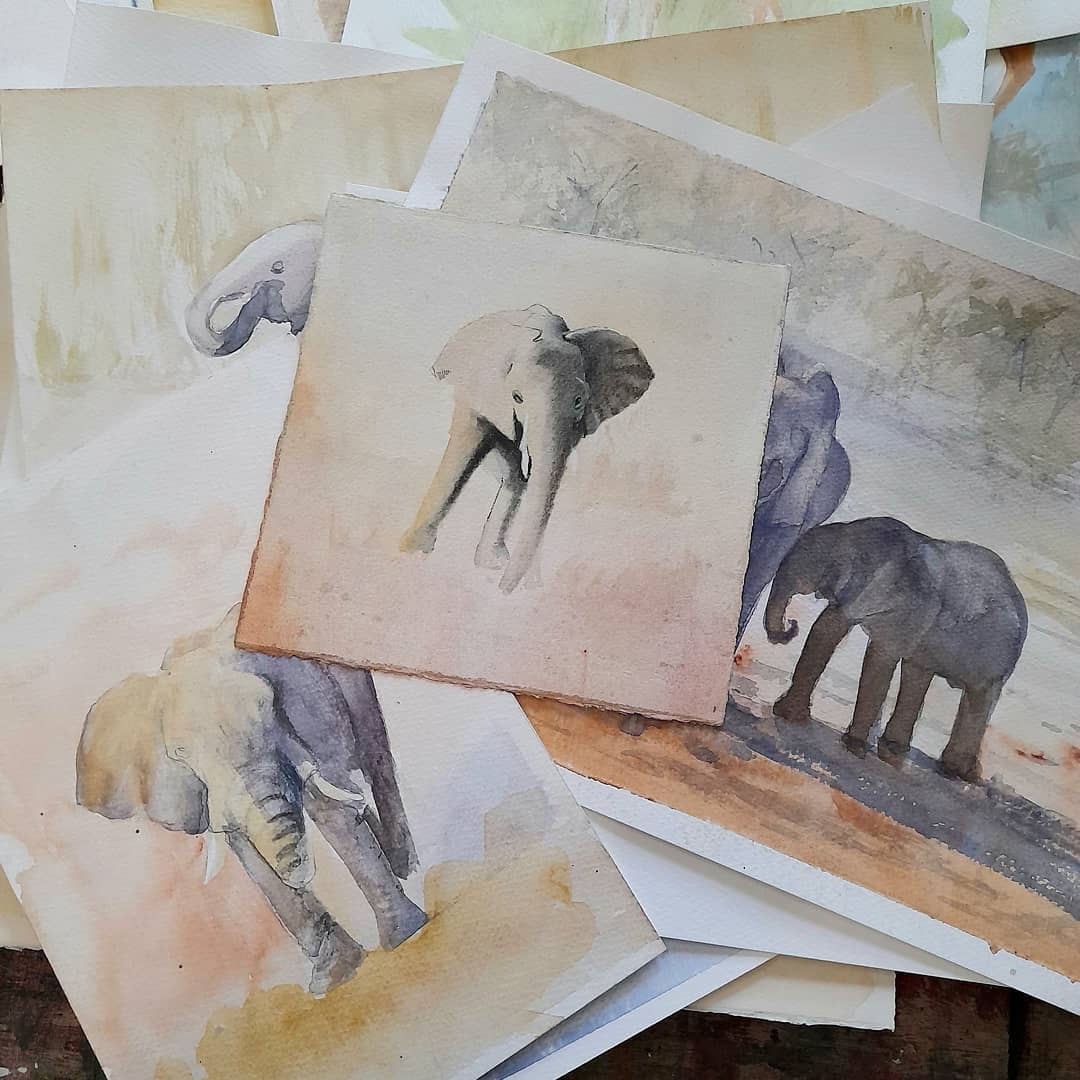
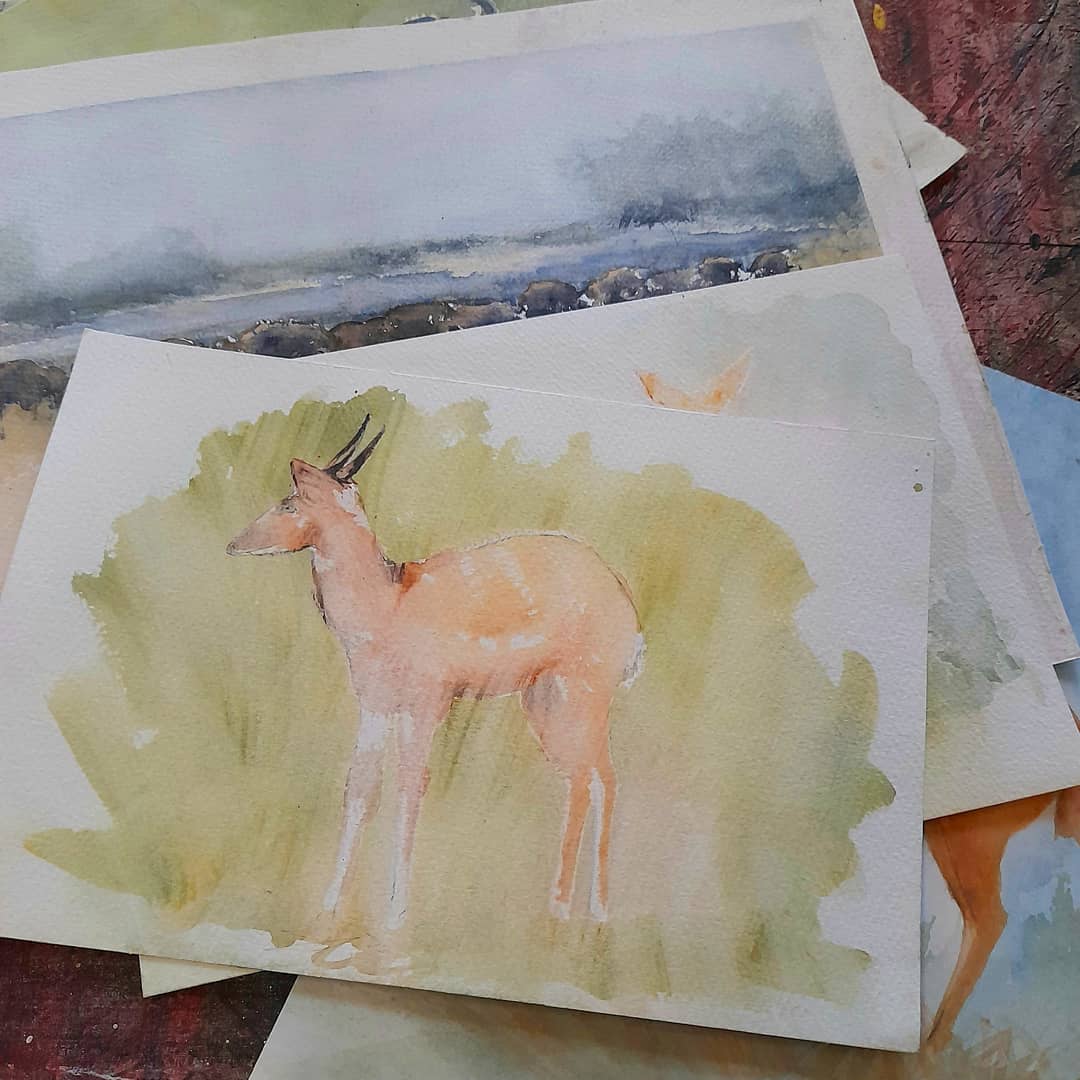
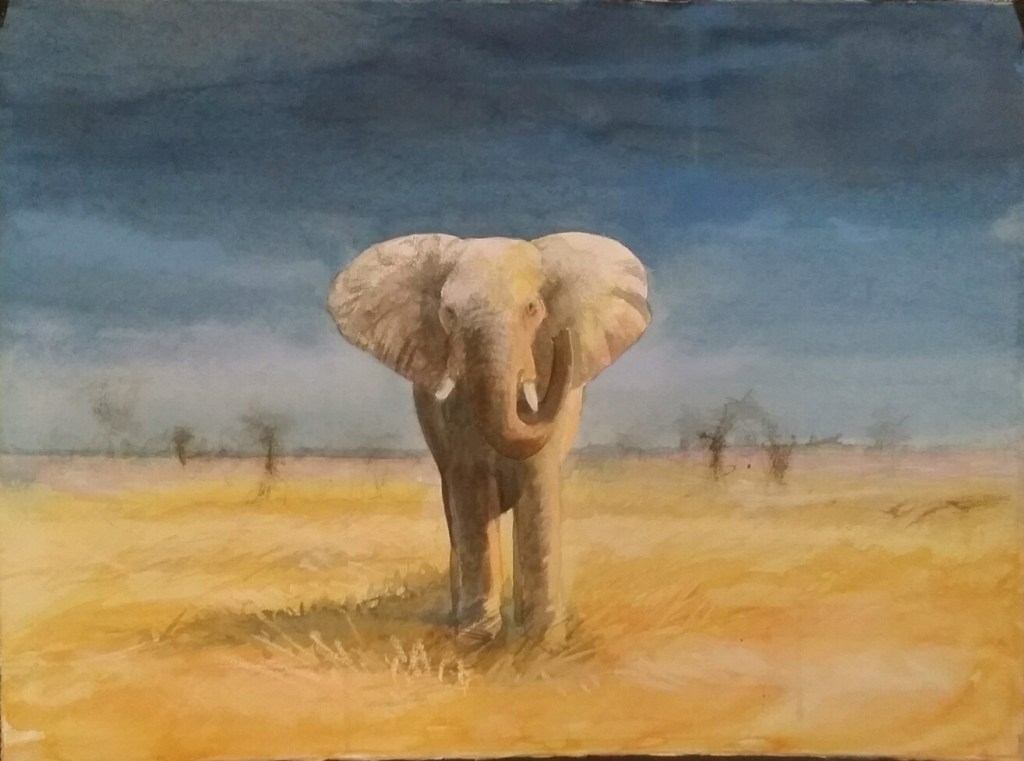
A lone zebra in the Makgadikgadi. Young yellow-bellied greenbul. Bull elephant in the Chobe river. Buffalo in the early morning with egrets. Amsterdam Albatross – not found in Botswana!
Sometimes I just don’t have much to say.😂
I have transferred most of my studio to Gaborone where I can teach and hang out with other artists. Hopefully more painting, more blogging will be the result – if not I daresay you’ll hear from me again in a year or so…
Note to self….. This is no way to build a career in art!!
My life has slowed down considerably now that my children are grown – in fact it has slowed to a pace I find comfortable! This will be too slow for most people, and particularly in terms of artistic output, I will have to find ways to scale.
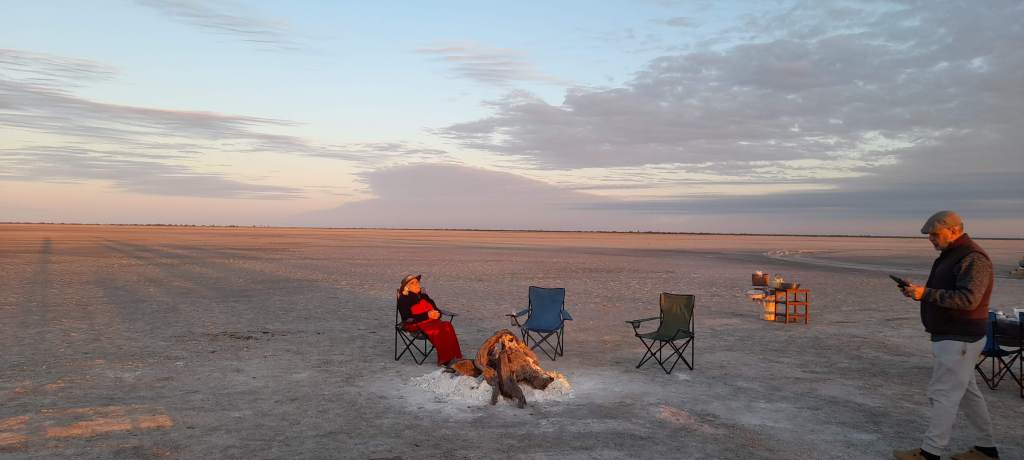
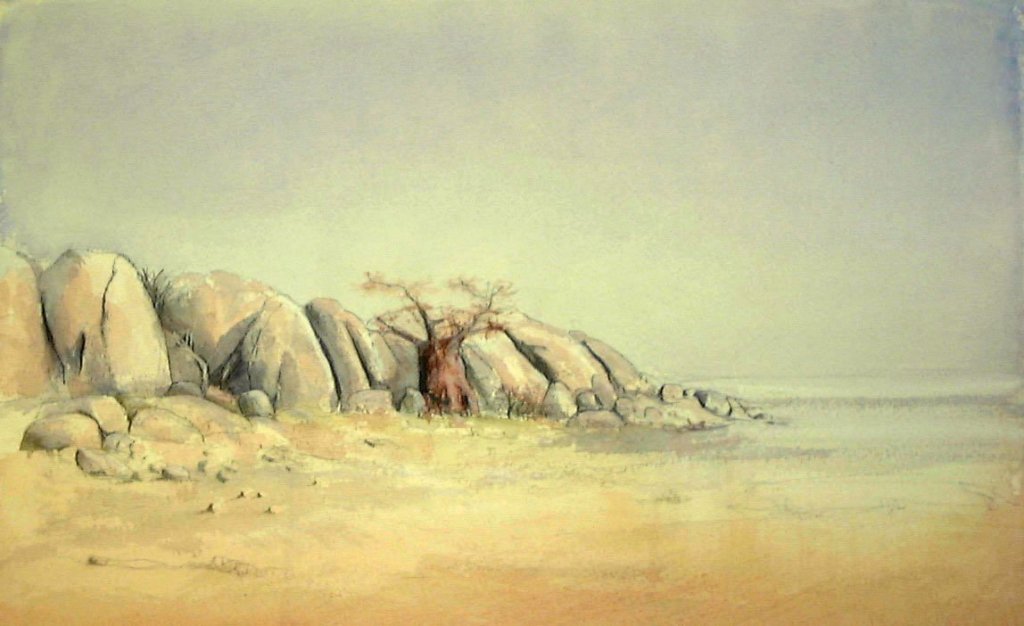
This picture of a campout in Ntwetwe pan with my mom and brother is to illustrate what I have found my work to be about. Some (many!) years ago I was invited to a women’s art workshop and asked to do a presentation – I managed to find some slides of my paintings and produced a power point for the other participants. The feedback was positive and encouraging and one of the artists pointed out that my paintings were about space and light. In those days I mostly did landscapes – a single baobab in a vast, flat, wilderness; Kubu Island from a photograph somebody else took (I still have not been there); a skyscape with setting sun. I surmised that I was escaping into peace and serenity through my painting, a way of coping with the chaos of a busy life. I see now that my themes have not changed. In the tranquil bush surrounded by birdsong and baboons I paint single elephants and birds – simple things. It is me.
I like space to breathe. I am capable of stillness. I notice things. Light is everything – how it touches nature and reveals its beauty is exciting to me. There is a poem by Wendell Berry that comes to mind whenever I sit and watch this world go slowly by:
‘When despair for the world grows in me and I wake in the night at the least sound in fear of what my life and my children’s lives may be, I go and lie down where the wood drake rests in his beauty on the water, and the great heron feeds. I come into the peace of wild things who do not tax their lives with forethought of grief. I come into the presence of still water. And I feel above me the day-blind stars waiting with their light. For a time I rest in the grace of the world, and am free.’
I believe that art can heal – it is an antidote to what most people experience as Life. My paintings are about the peace of wild things, space and light, simplicity and stillness. It has taken me a long time to realise that.
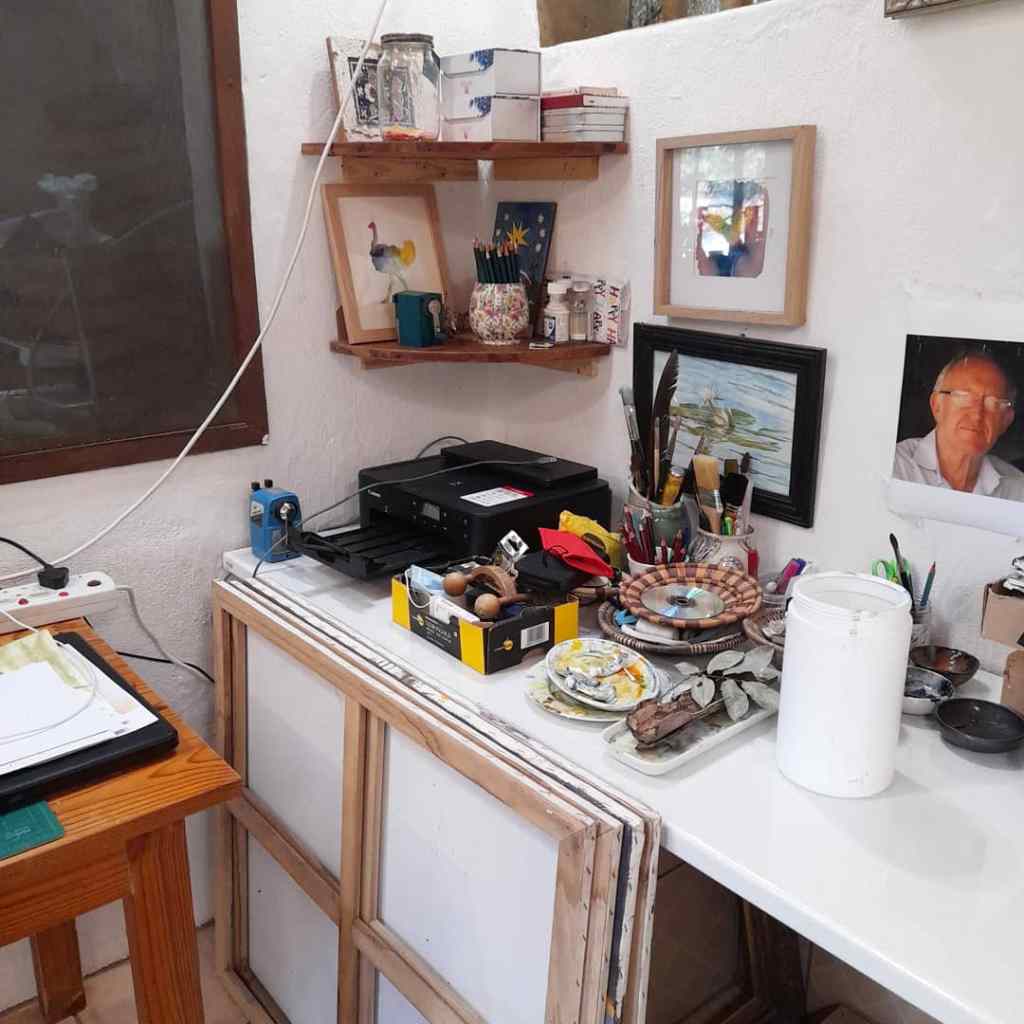
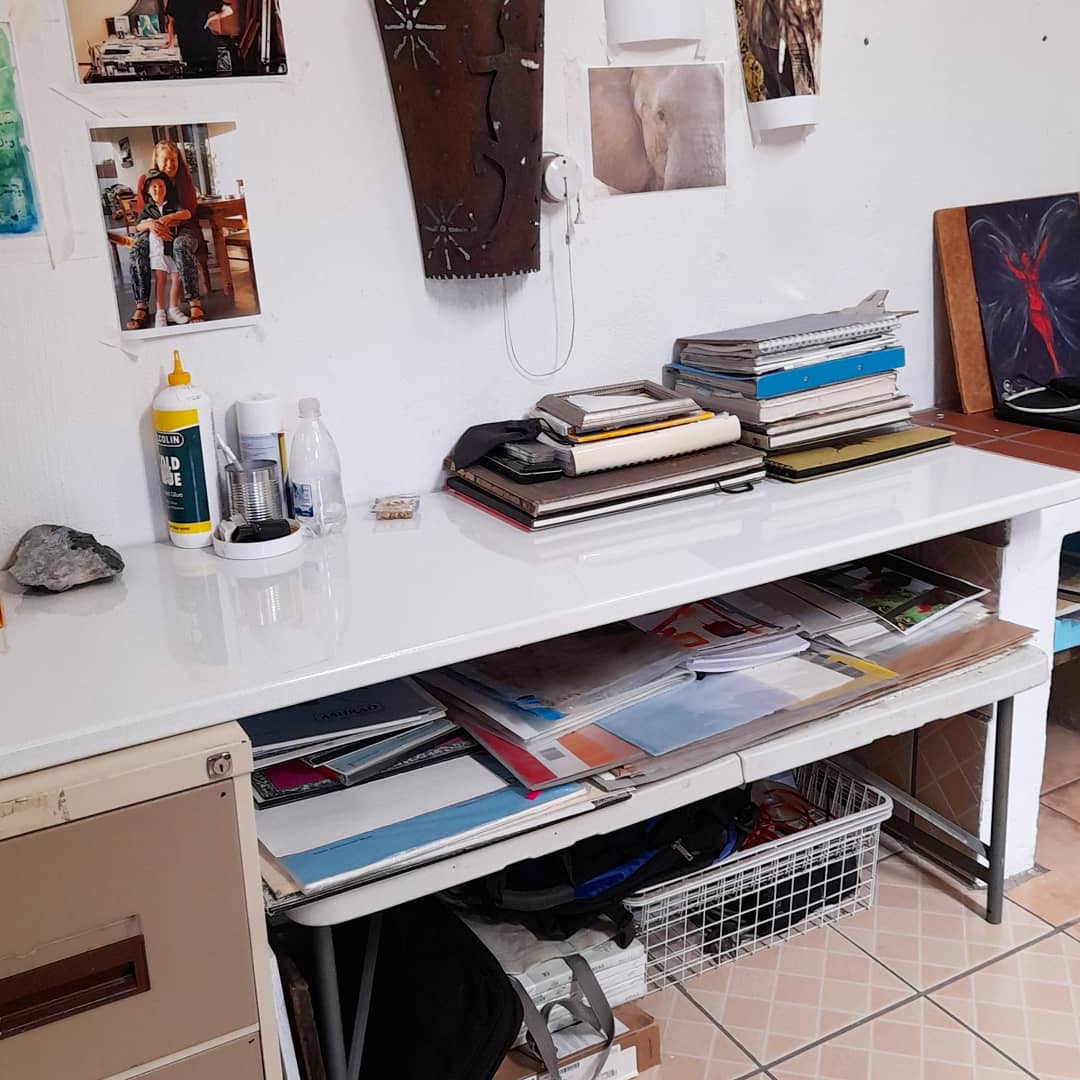
There comes a time in an artist’s studio practice when there is nowhere to work. All surfaces are occupied, references are piled on the floor and there is a very real danger of spilling coffee on the masterpiece or putting the mug down on top of a very nice little sketch. Don’t ask me how I know!
The amount of time spent in preparation and mental manoevres to get to a flow state is often greater than the time spent painting. I have been gearing myself up to working in oils seeing as most of my watercolour paints have rigor mortis – they lie twisted and dried up in an After Eights tin. Hence a massive clean up and a rummage in the tool box for a spanner or pair of pliers that will get the tops off oil paint tubes.
I am struggling already with oils as they have no mind of their own and need me to place every blob and stroke. Oil paint sits on the surface like a tiny turd and I have to resist the urge to saturate it in turps and spread it over the canvas like a watercolour wash. It does not work like that, and so I feel like a complete beginner again! Thanks to YouTube and a million art tutorials I am more confused and frustrated than ever and remind myself that this is the life of an artist. I am far from cutting off my ear, but slashing the canvas and throwing my brushes at the wall is a recurring thought.
Enjoy these images of tidiness and clearish surfaces. A rare treat!
I’m afraid I don’t have much staying power – the initial thrill of painting wears off as I get into difficulties and there is always something new and exciting in the garden (or over the fence!) that I want to paint. However, I think I must revisit some of these unresolved masterpieces. I have the finished pictures in my head – I just don’t know how to get them onto paper!!
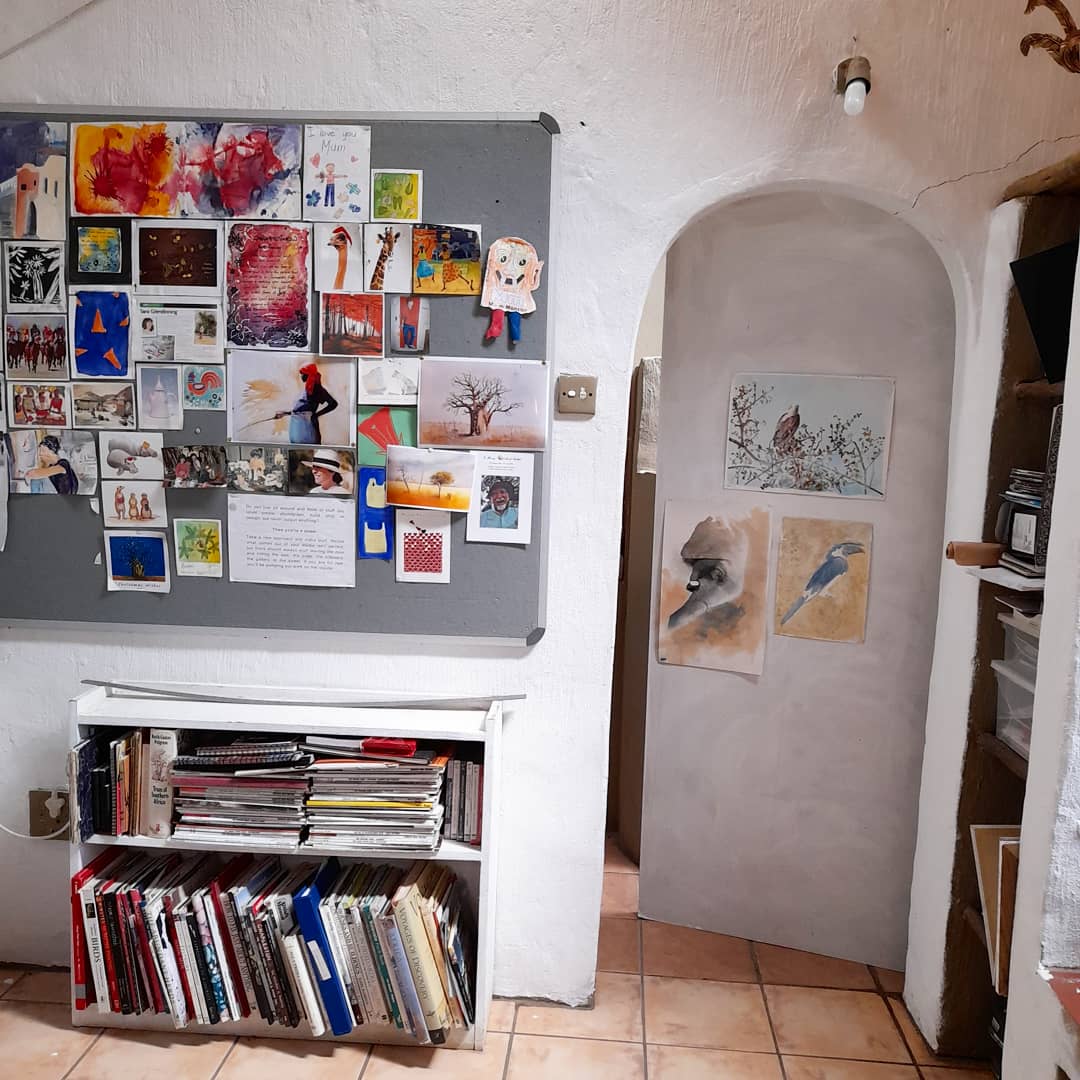
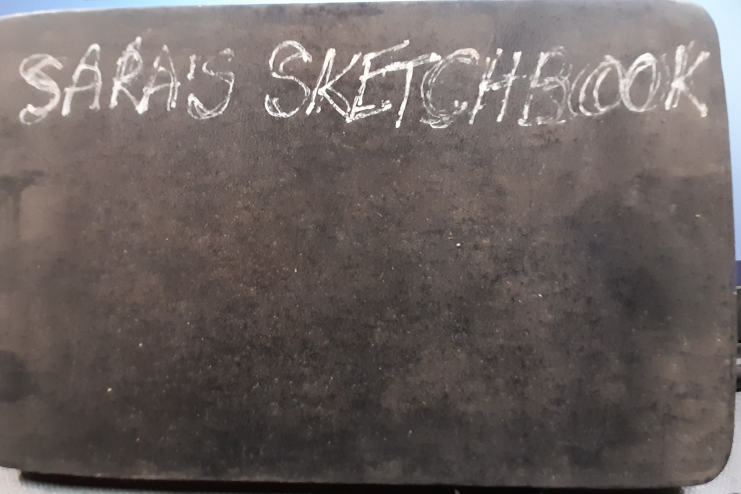
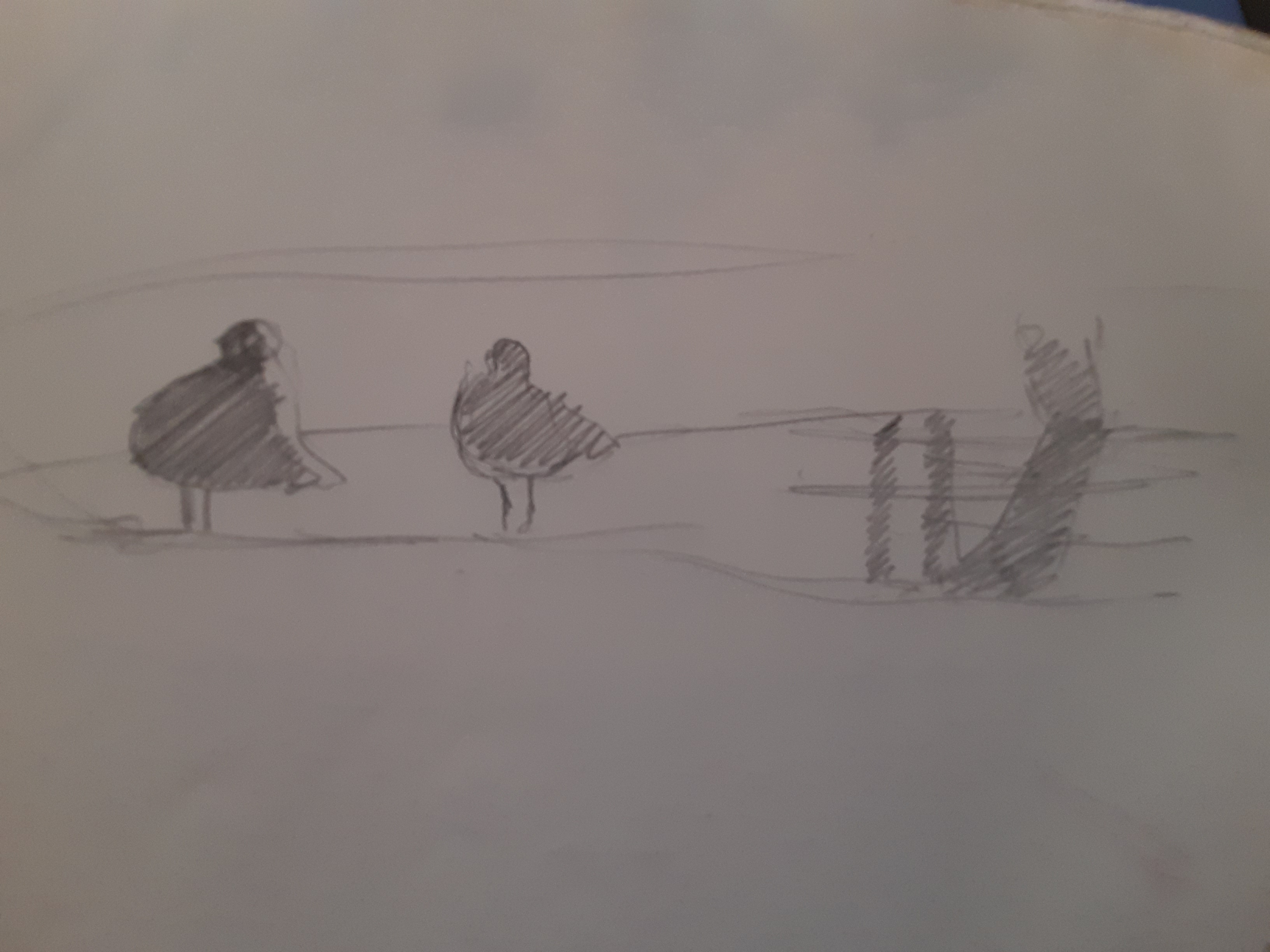
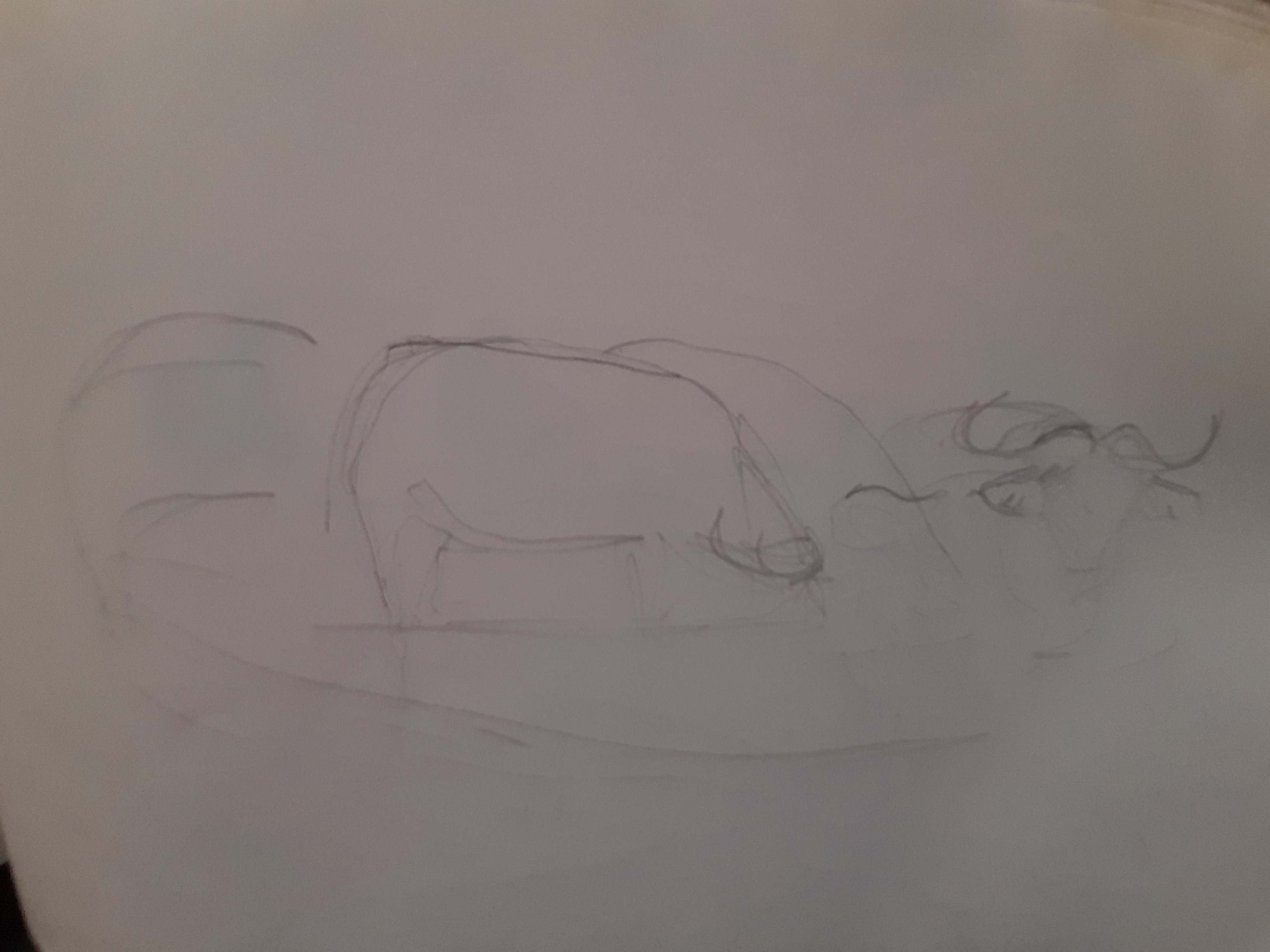
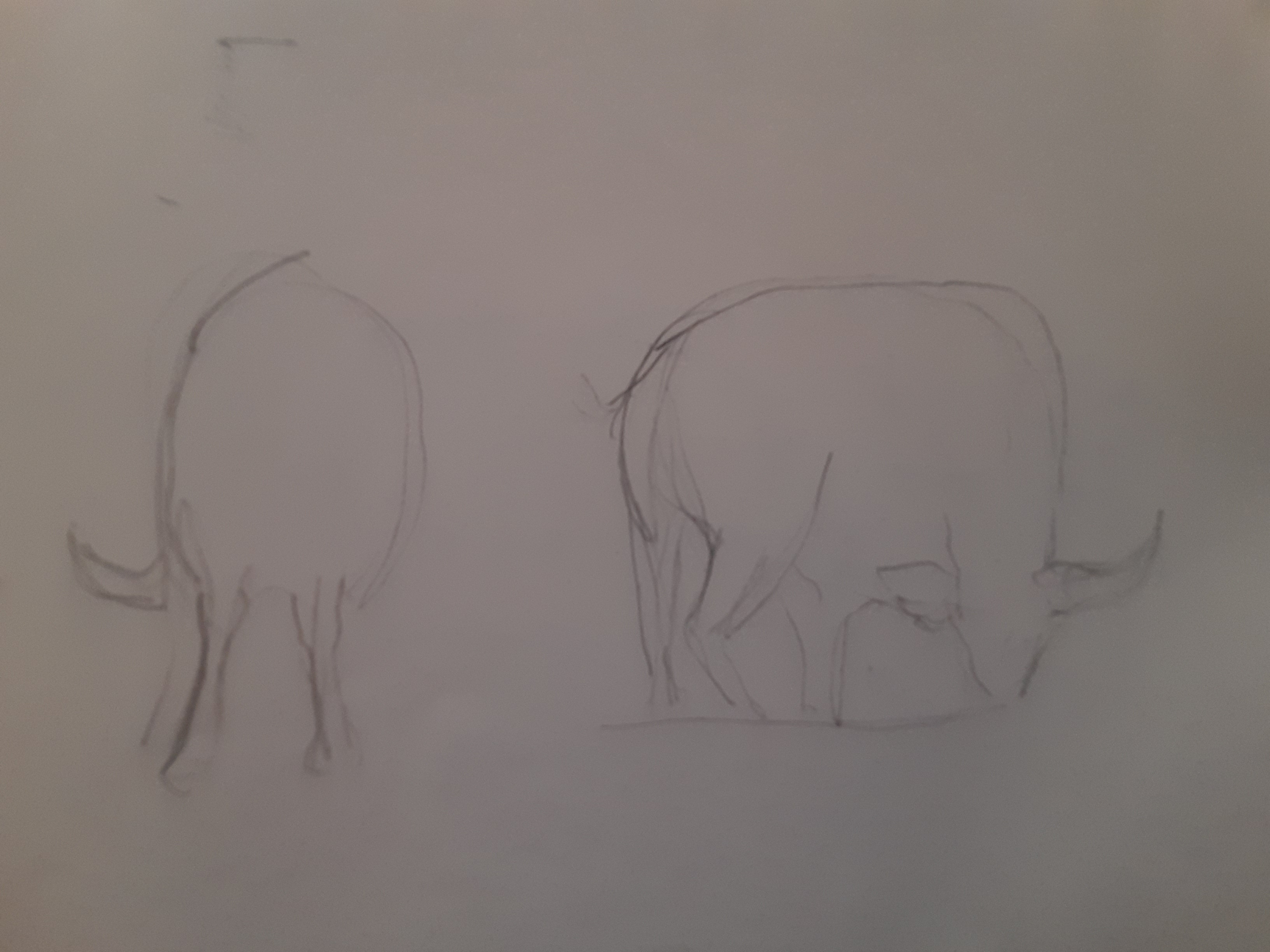
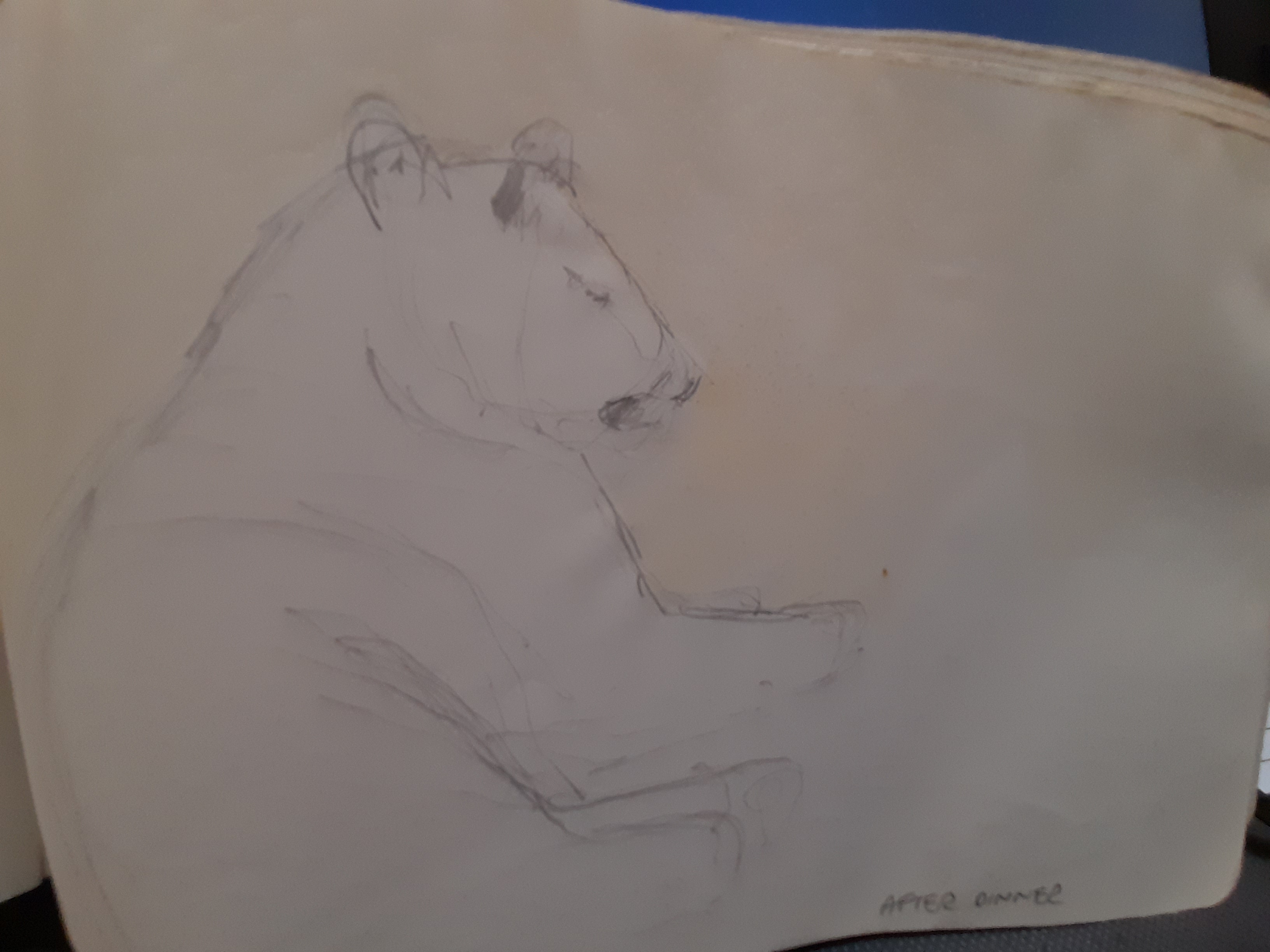
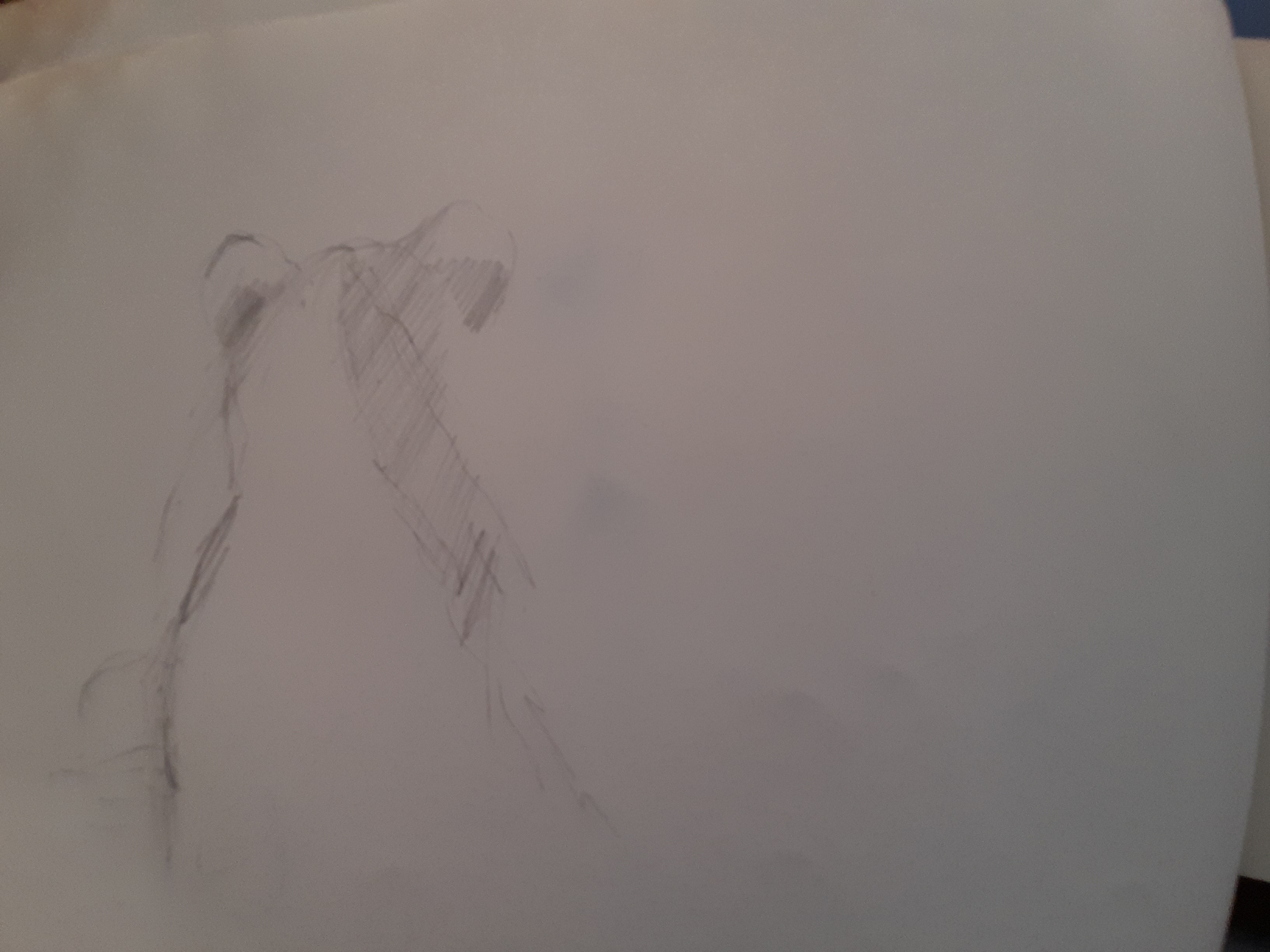
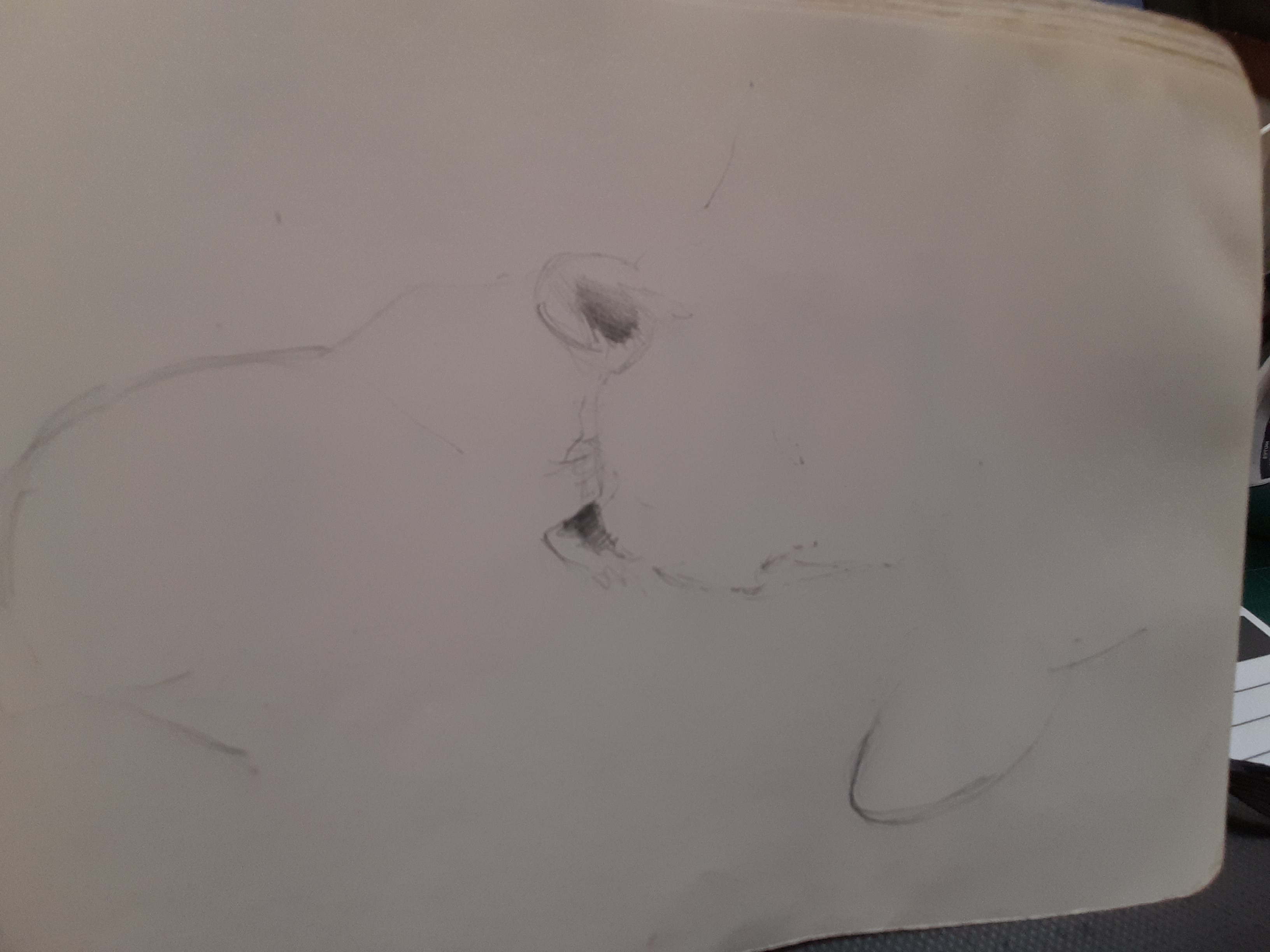
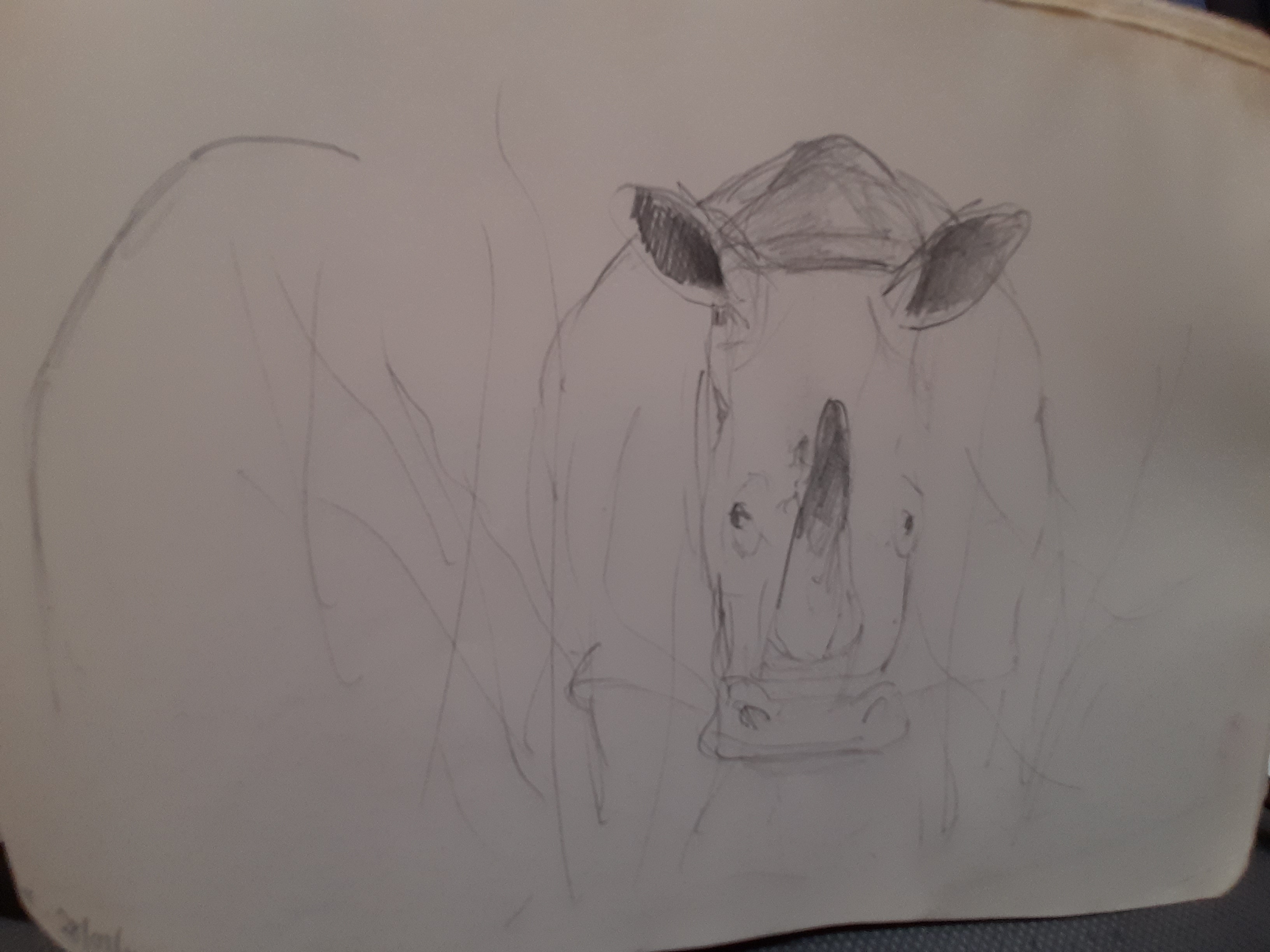
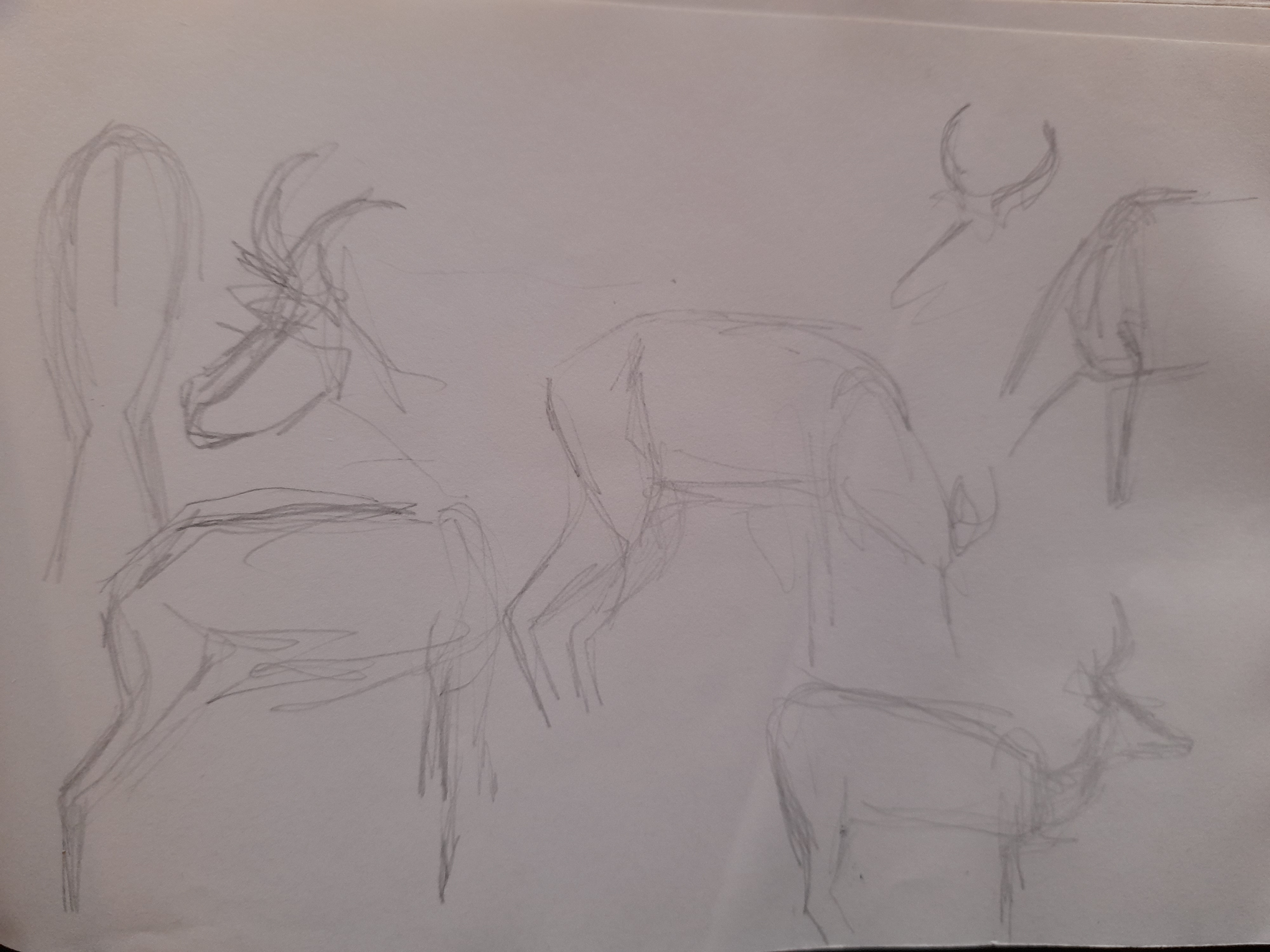
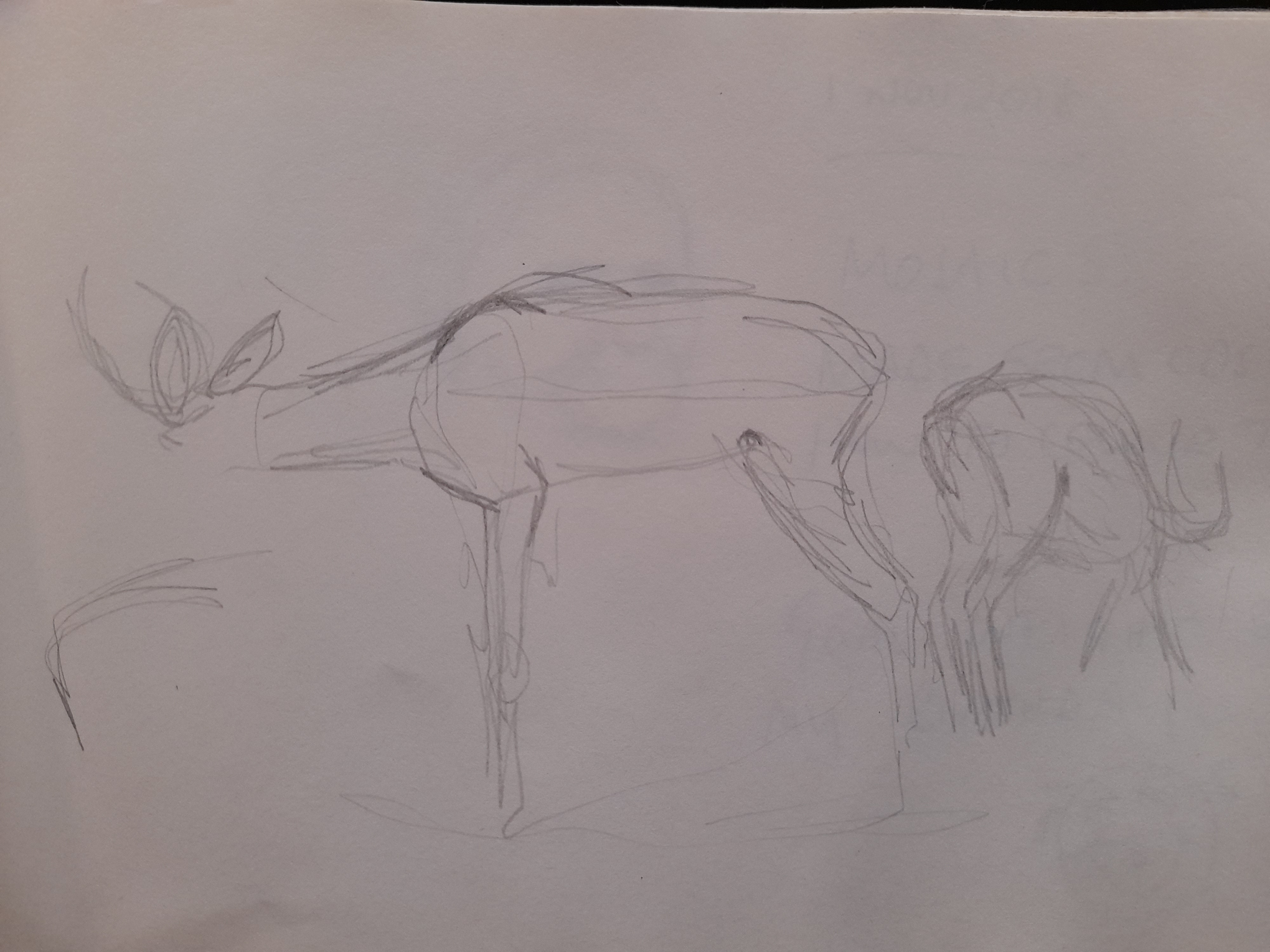
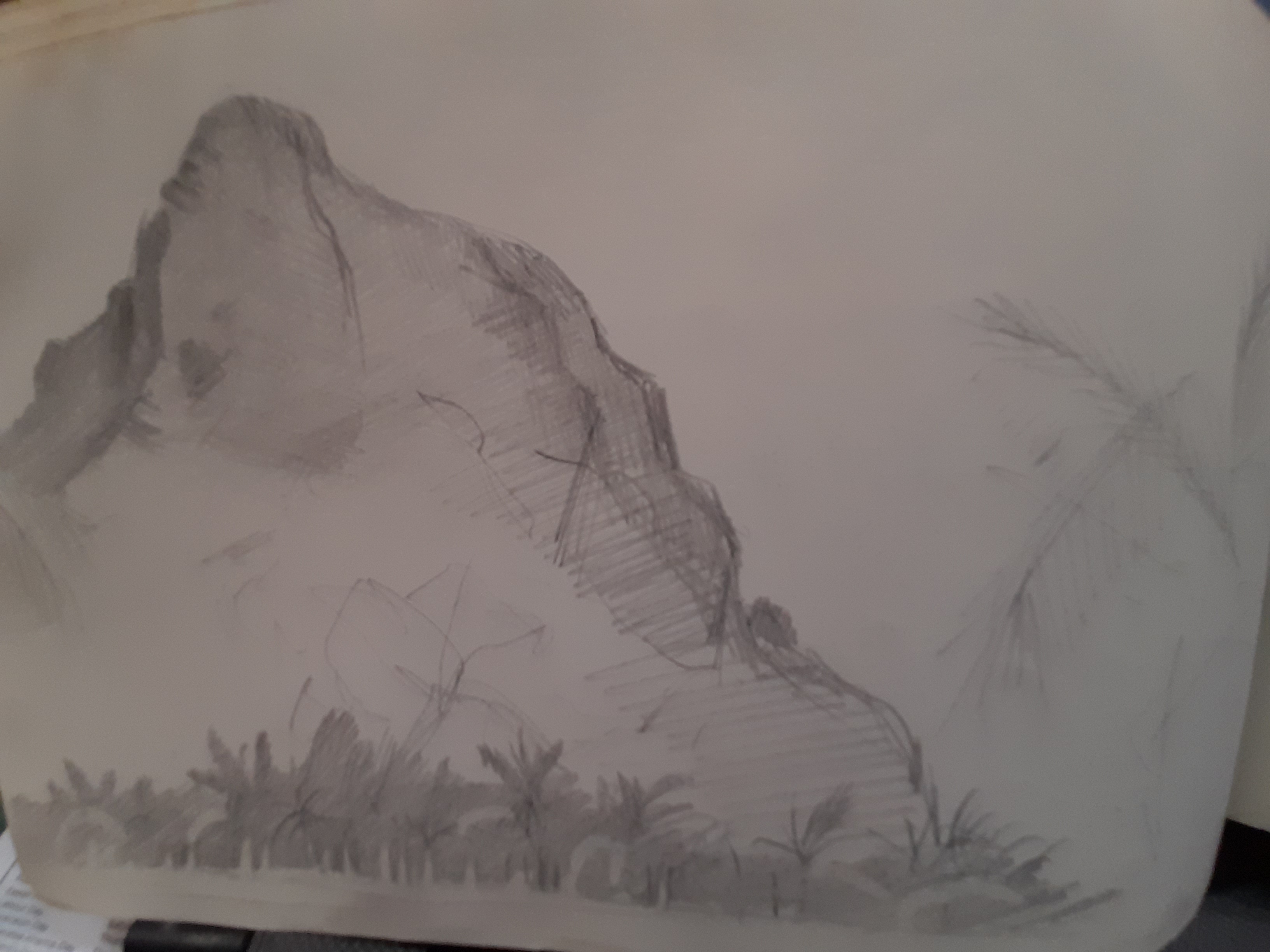
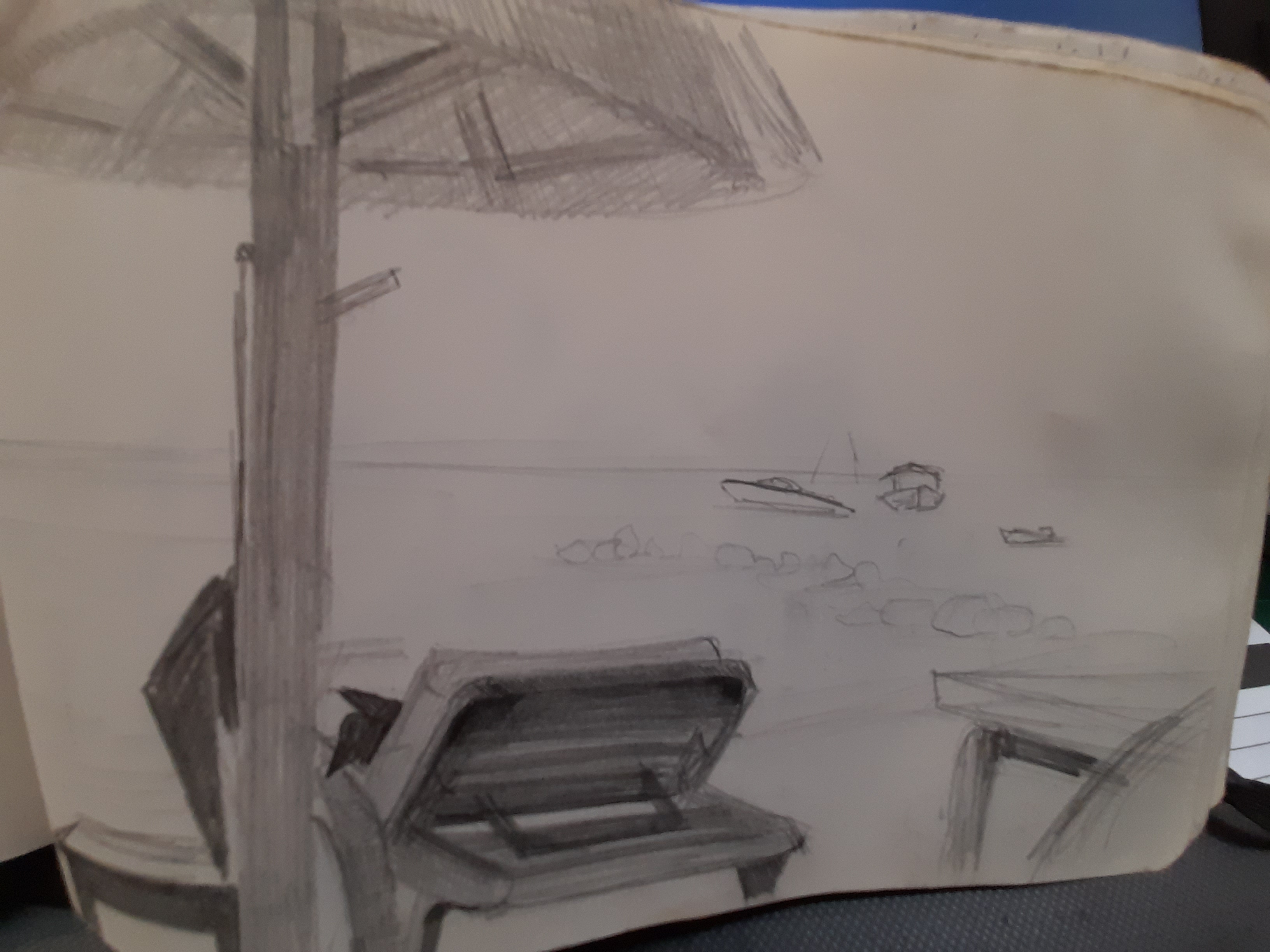
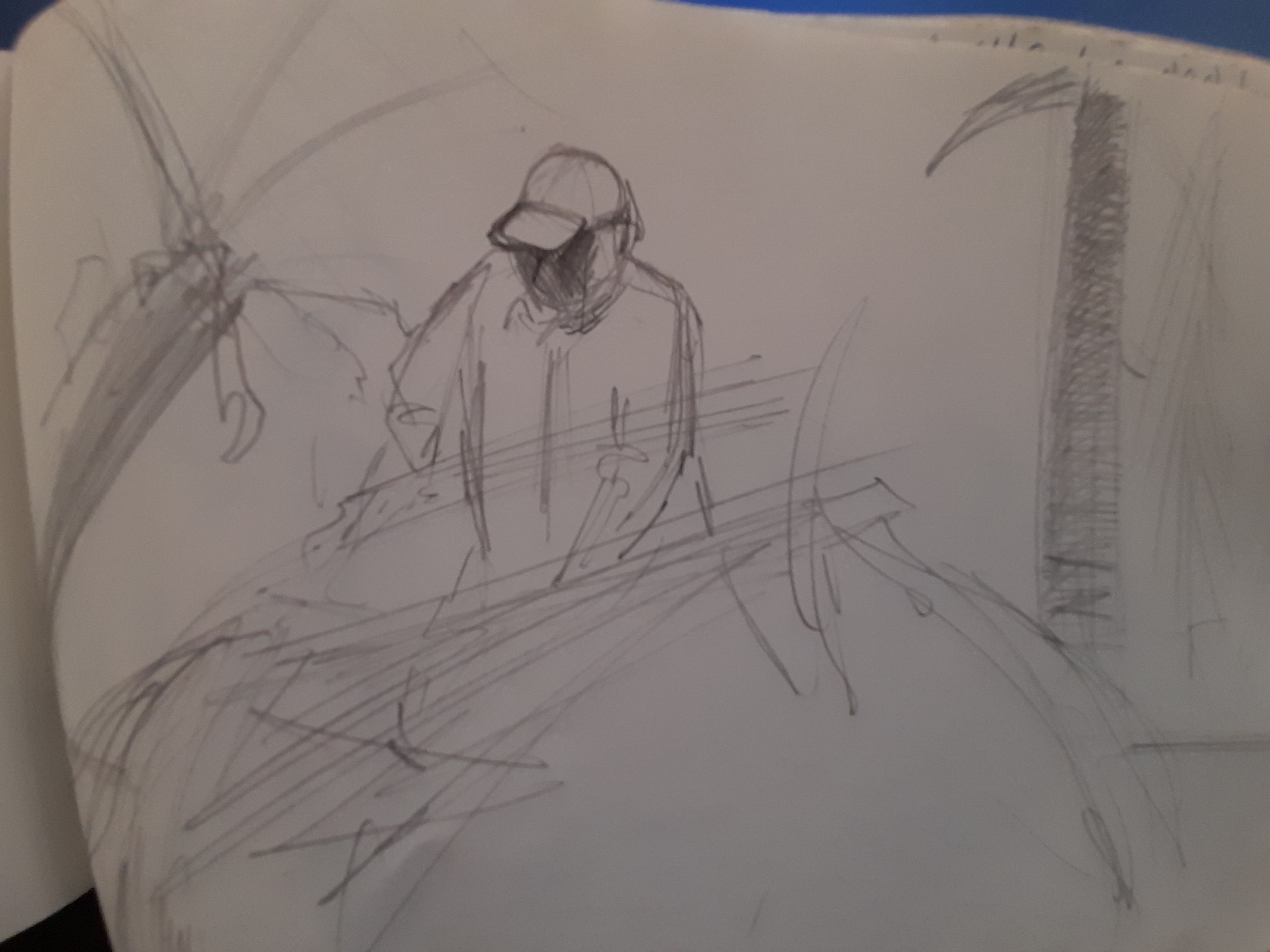
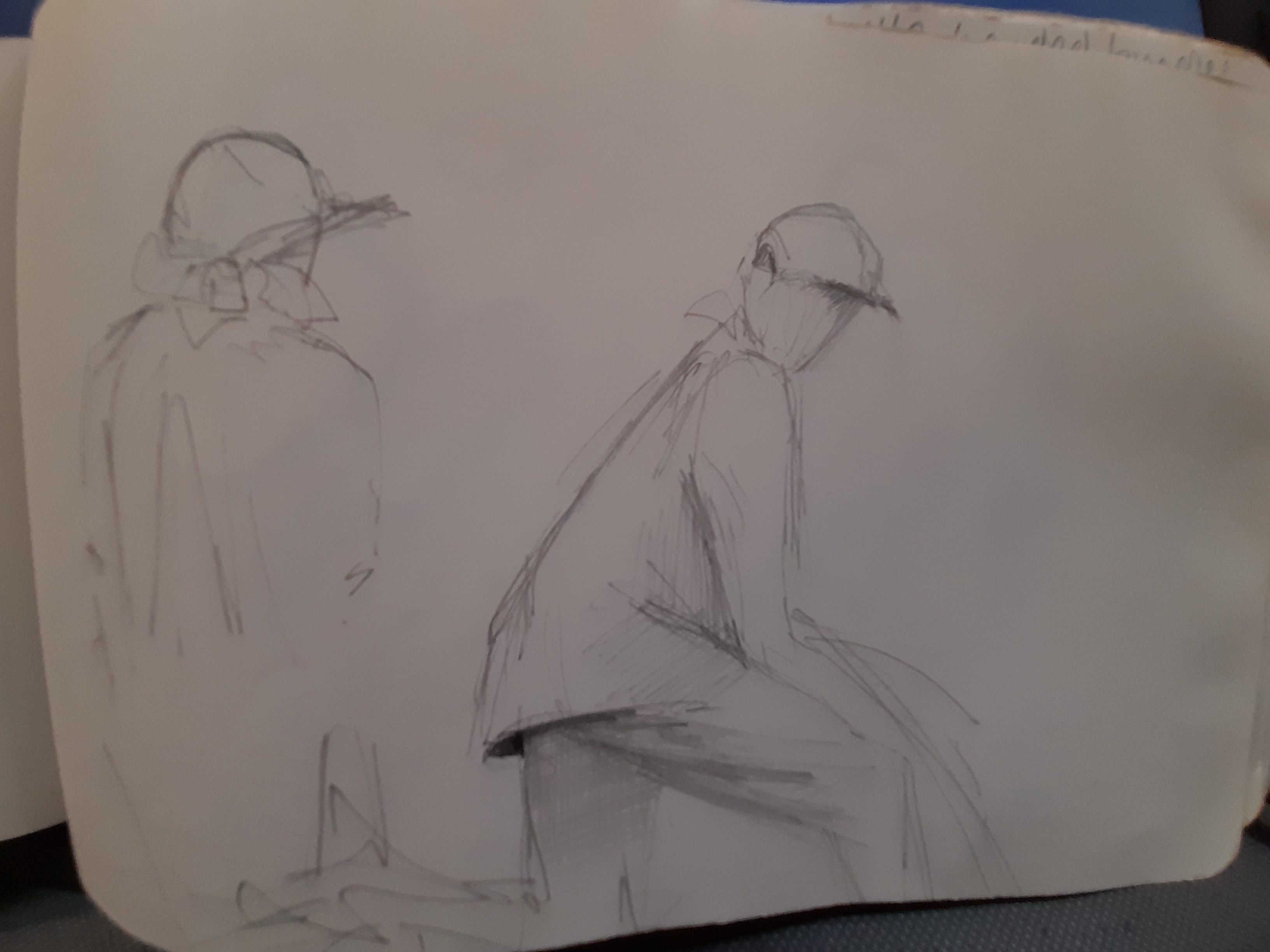
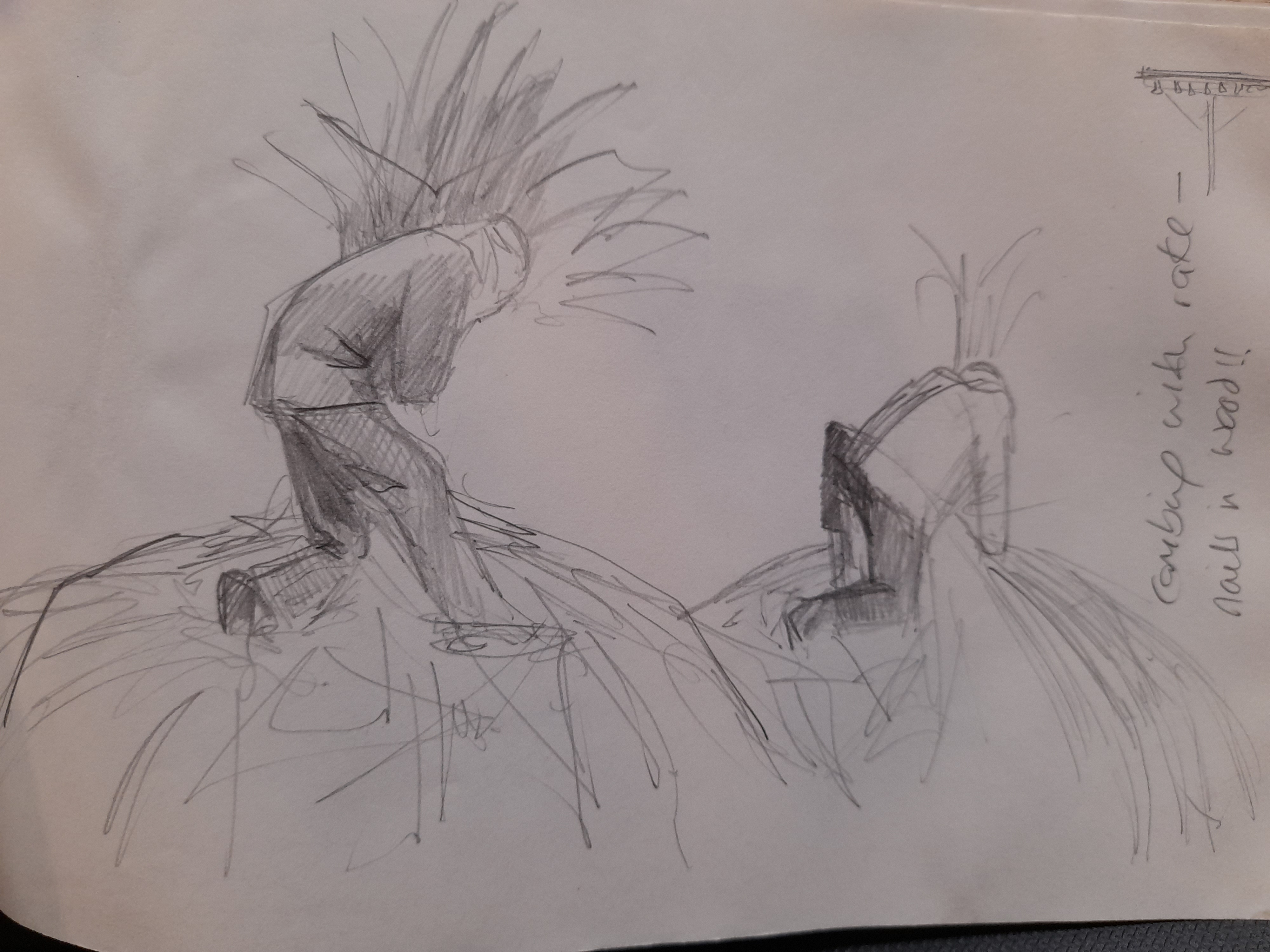
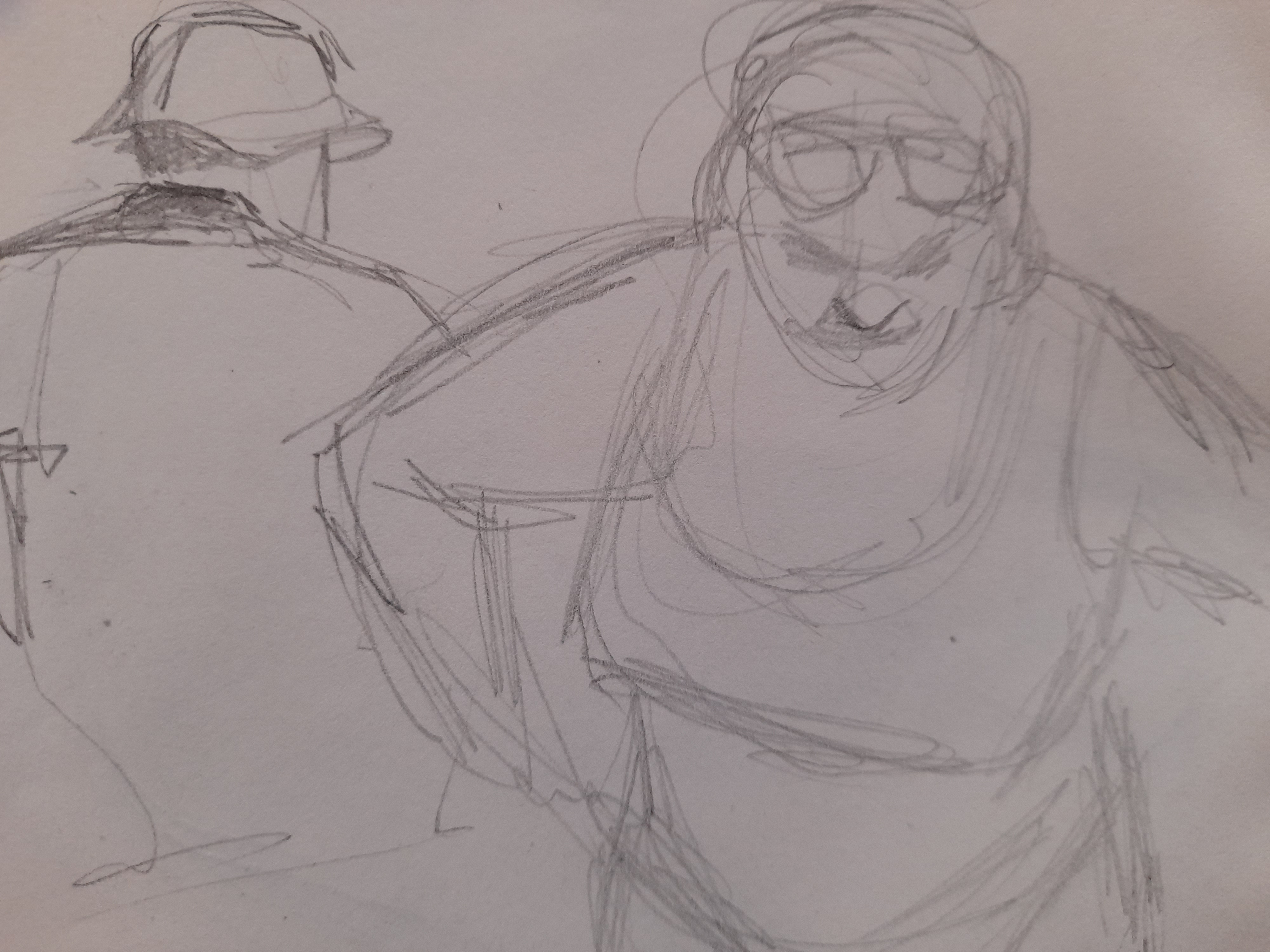
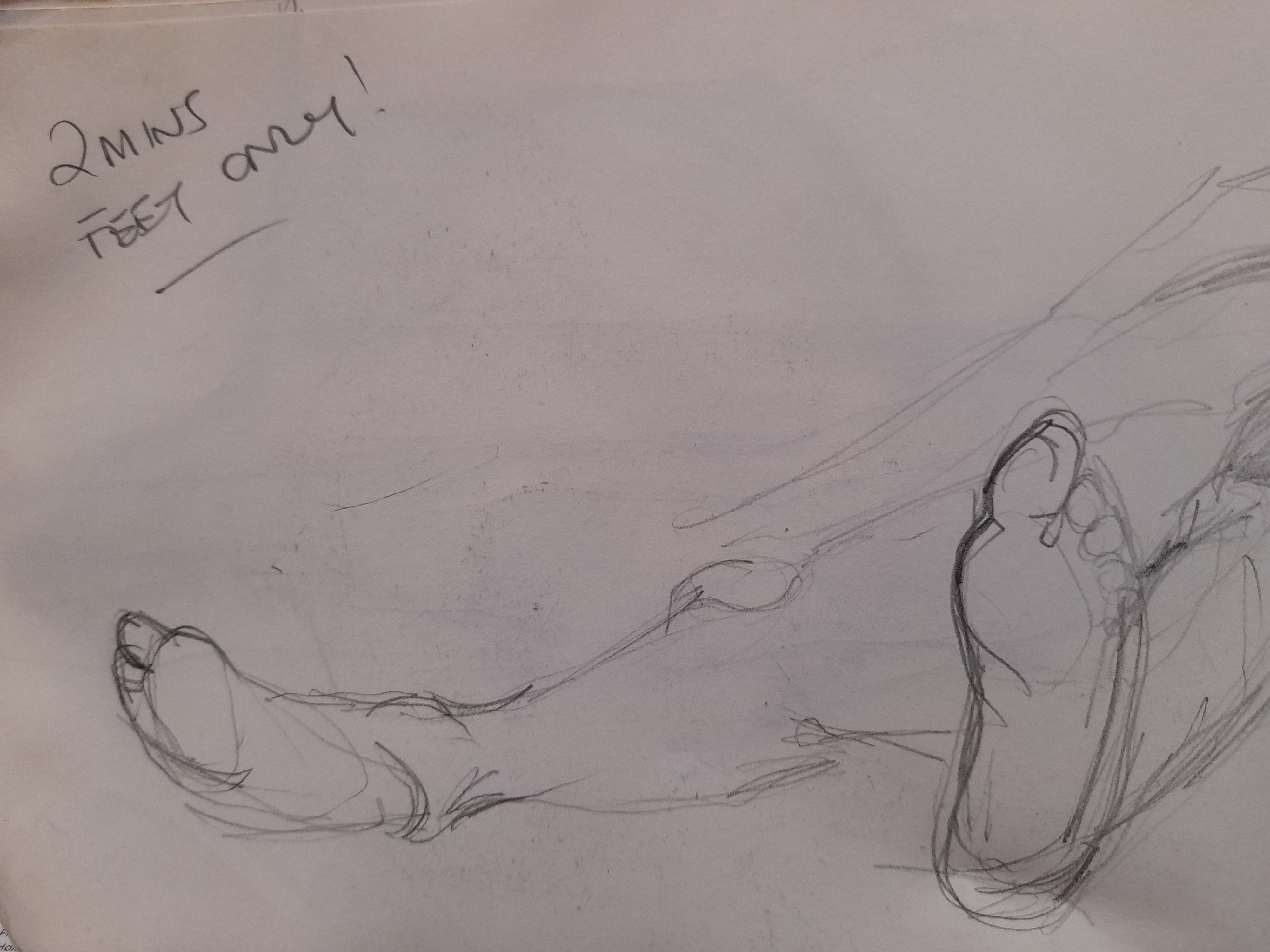
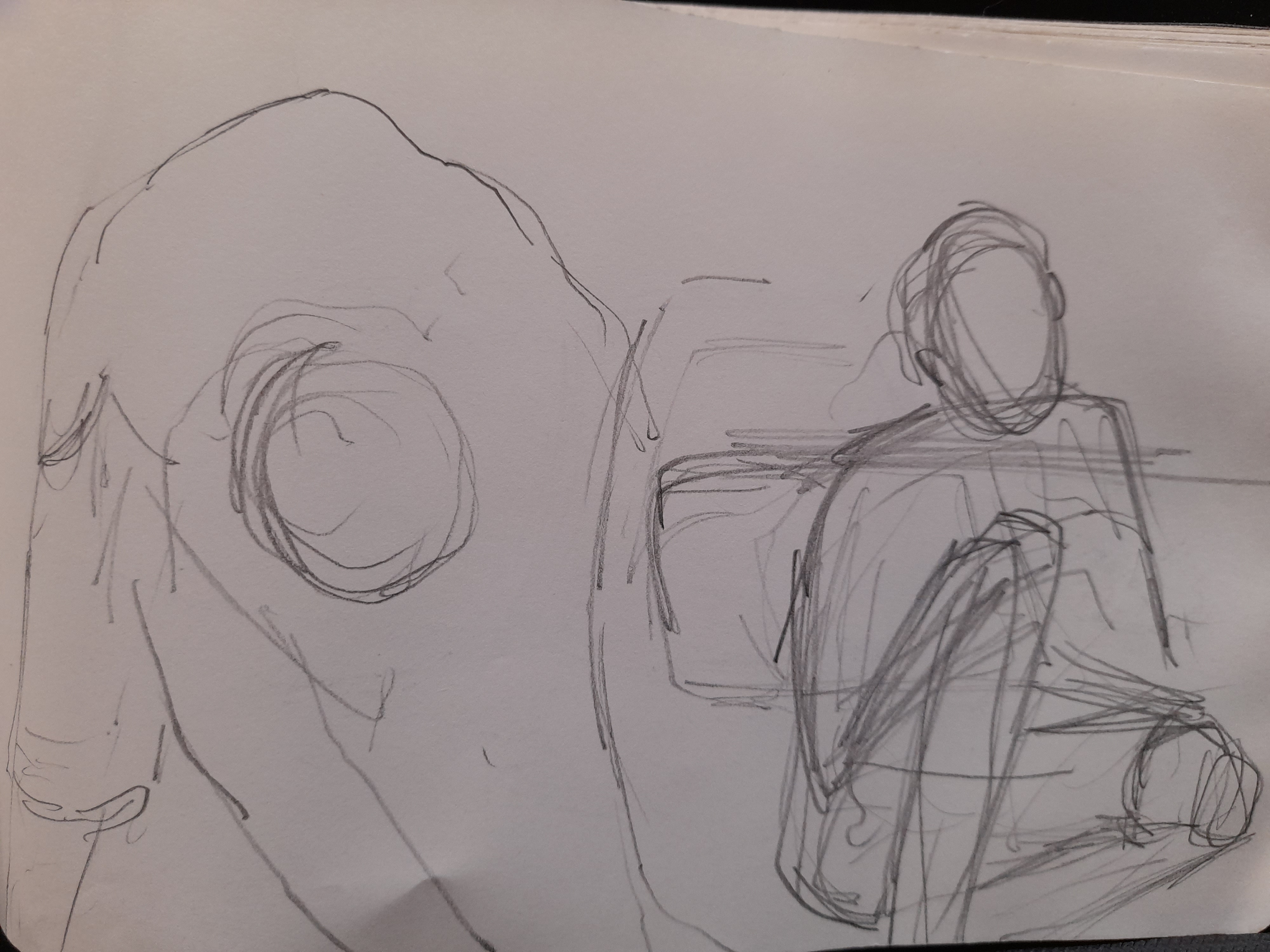
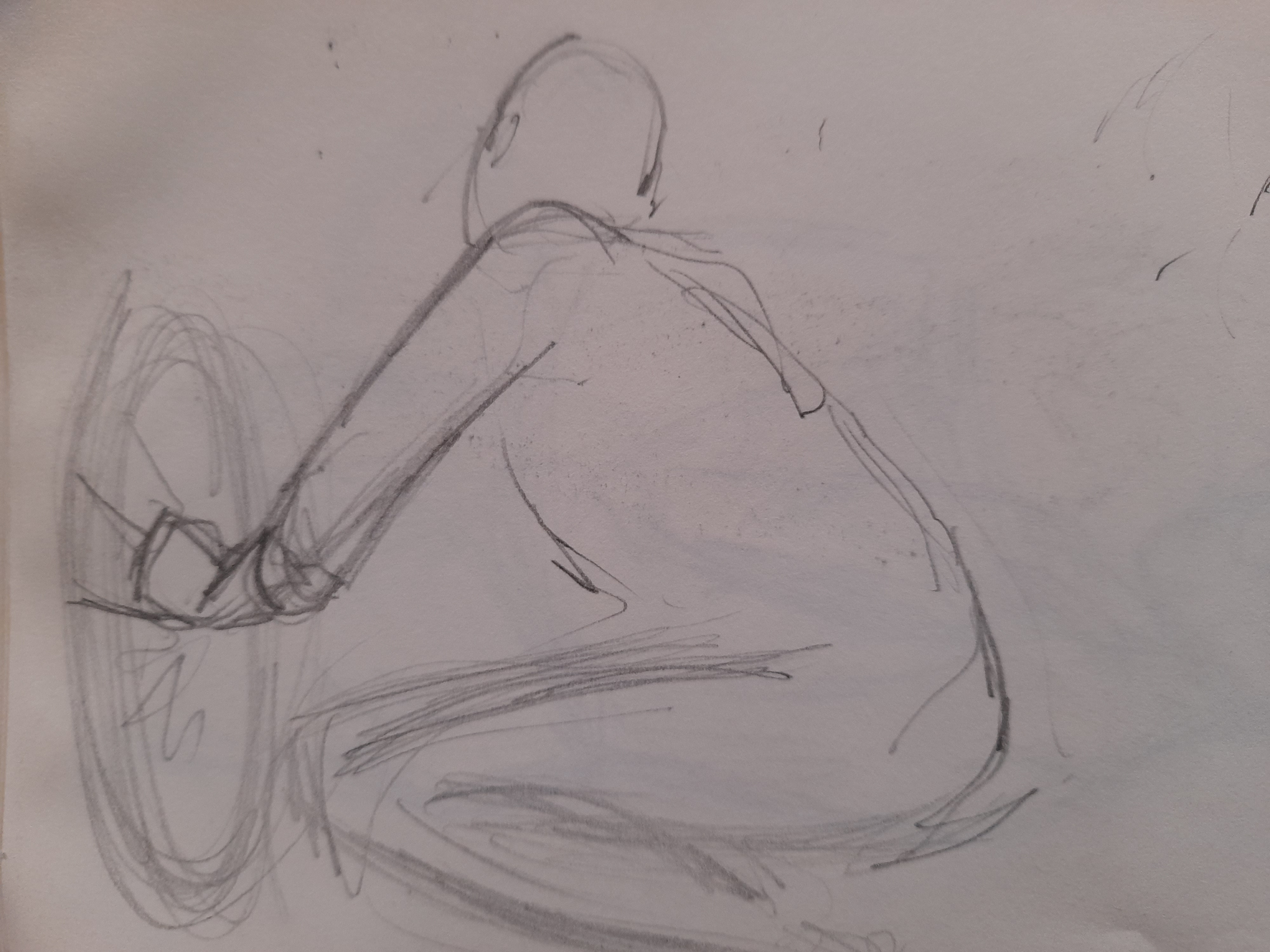
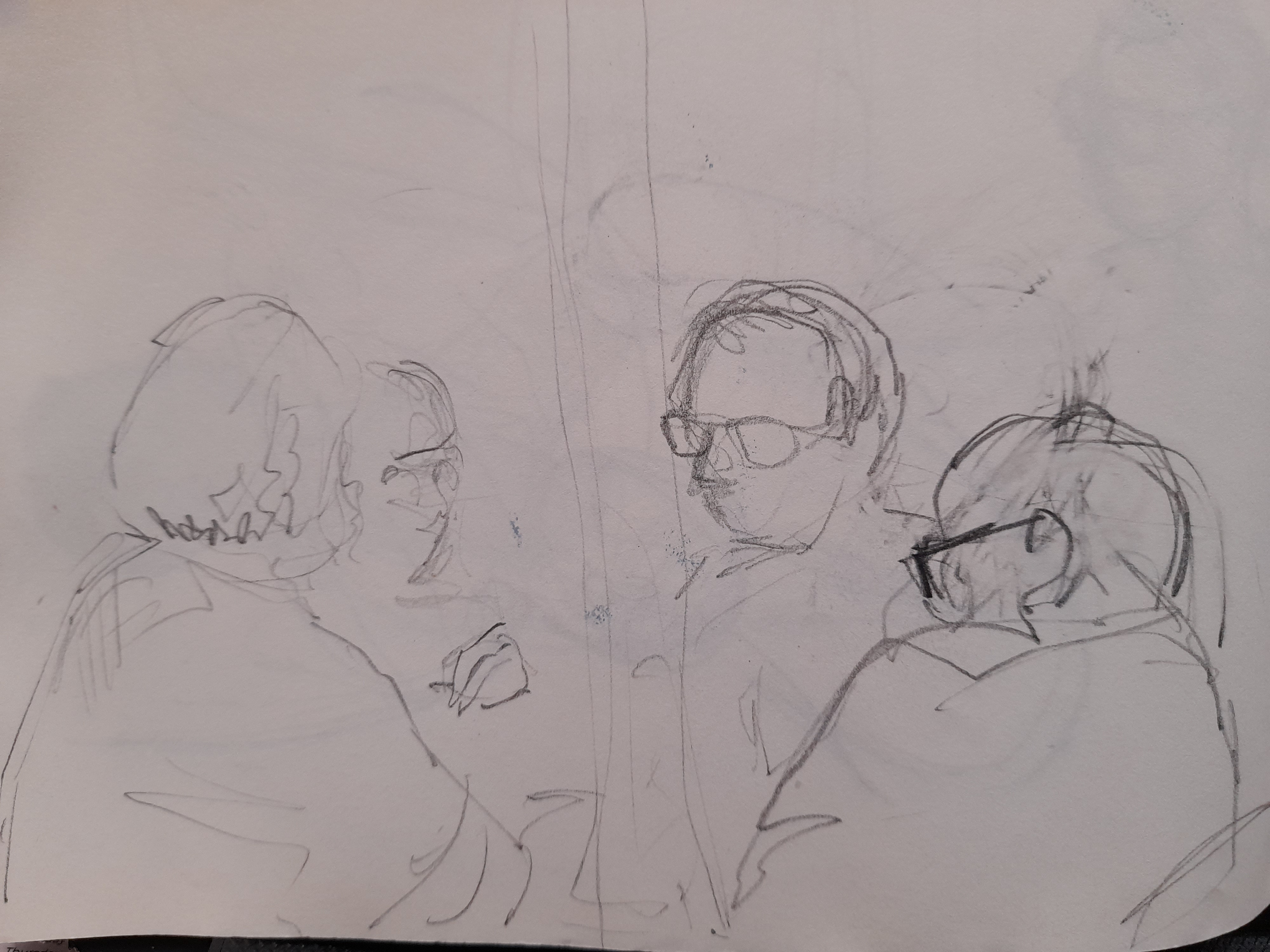
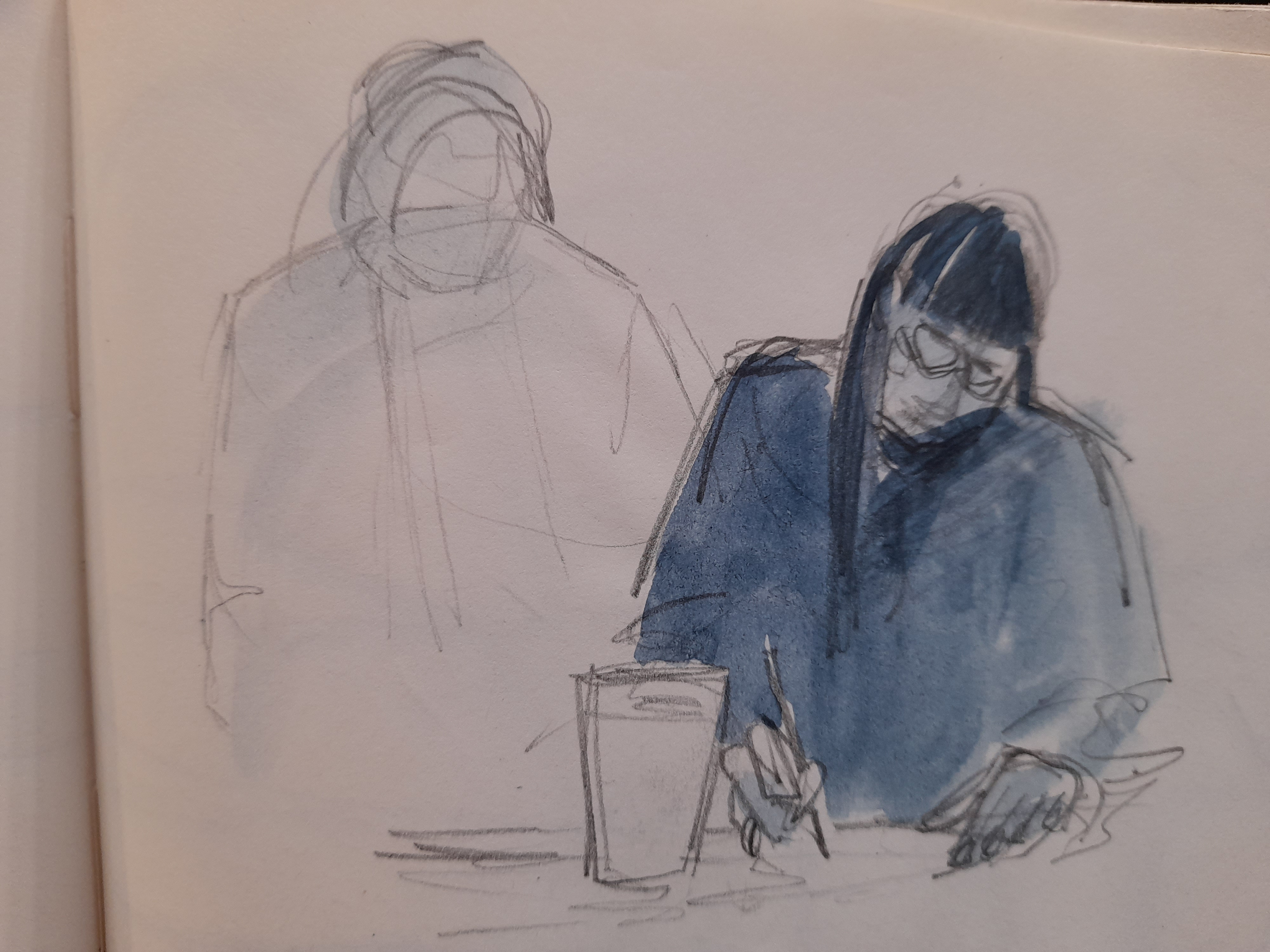
I have Stuff to do and so my brain finds other things to mess with. I put a bookshelf in the studio and in the general tidy up I came across old sketchbooks. I never finish a sketchbook – I invariably put it somewhere and can’t find it so I spent a happy hour revisiting an art safari in Madikwe, a trip to Mauritius, and what looks like a sketch challenge to draw people. It’s hard to imagine the easygoing freedom to BE with people that we had before lockdown – hopefully soon it will all be in the past and hugs and handshakes will be okay again.
Madikwe – animals MOVE – so frustrating but good to catch essentials and practice looking.
Coming from Botswana where we have thatched roofs, it was interesting to see these thatchers with a different material and method refurbishing the beach umbrellas.
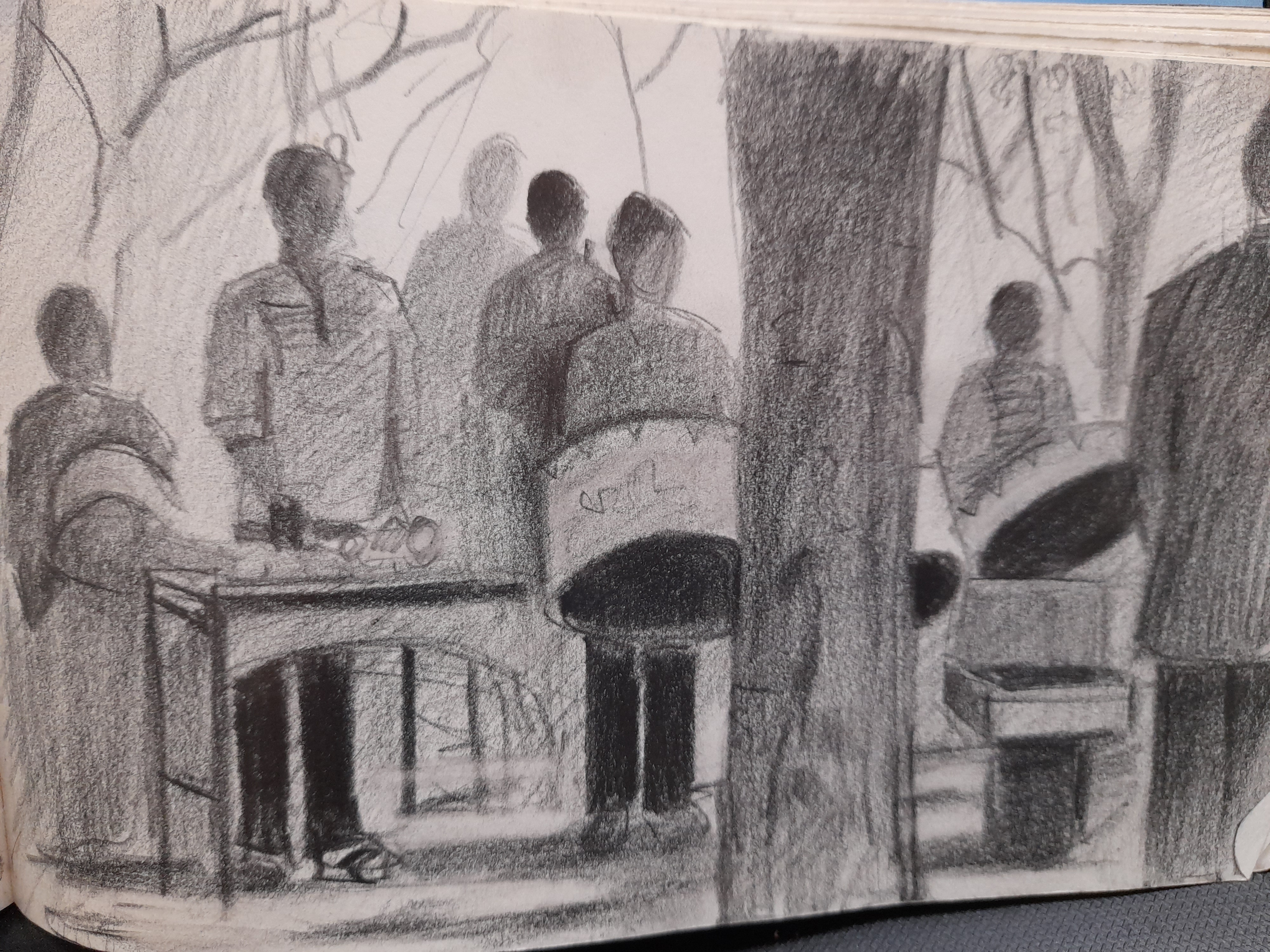
Quick sketches and a long one of a steel/marimba band in Rosebank. 100 people 100 days challenge? I didn’t get very far!
The wonderful thing about watercolour painting is the way the paper reflects light through the paint giving it a luminous quality. Made up of pigment and a binding medium, watercolour paint was generally used for sketches and ideas, and to tint drawings and studies for bigger ‘proper’ paintings. It really came into its own during the mid 1700s when the Romantic era came into being and there was an explosion of fine art, music, and literature. Artists were inspired to record nature, landscape, and to travel to Europe (once the Napoleonic wars were done!) and to exotic places full of antiquities and sunlight.
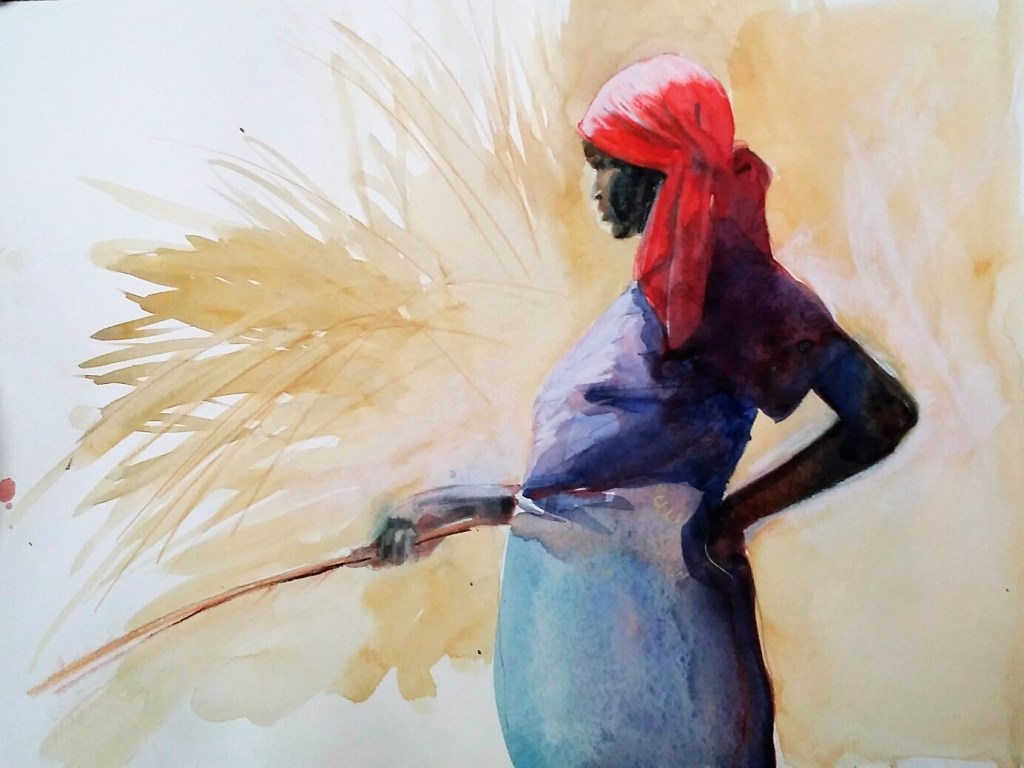
It is this ability to convey light that attracts me to watercolour – I am never inspired to paint grey and gloomy cityscapes for example – but sunbirds caught in a ray of sunshine, the sunset sparking the edges of clouds, and the contrast of a figure standing against the sun with a home made fishing rod; these are the things that excite, frustrate, and challenge me. It is never perfect but I am learning to give in gracefully and say ‘that’ll do.’
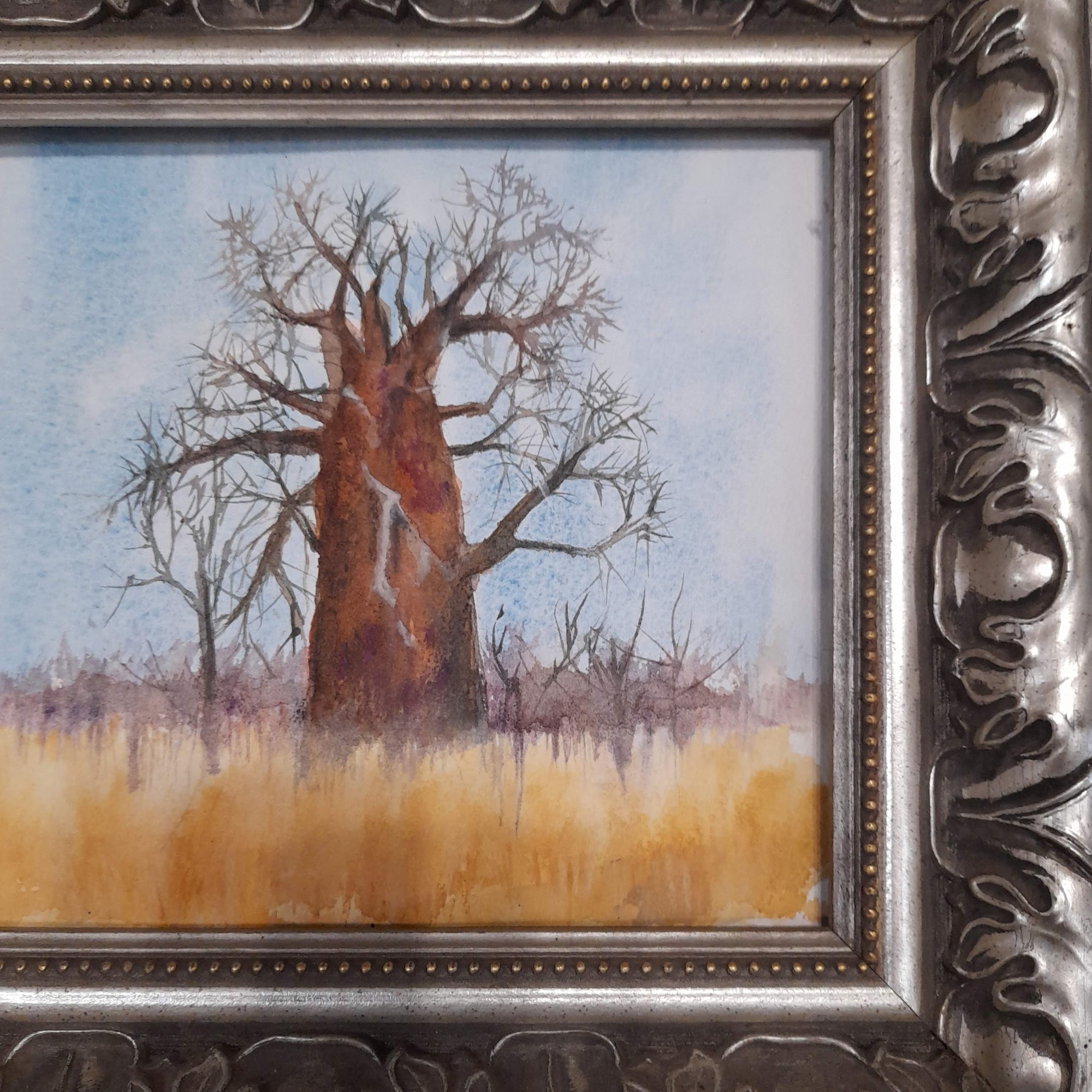
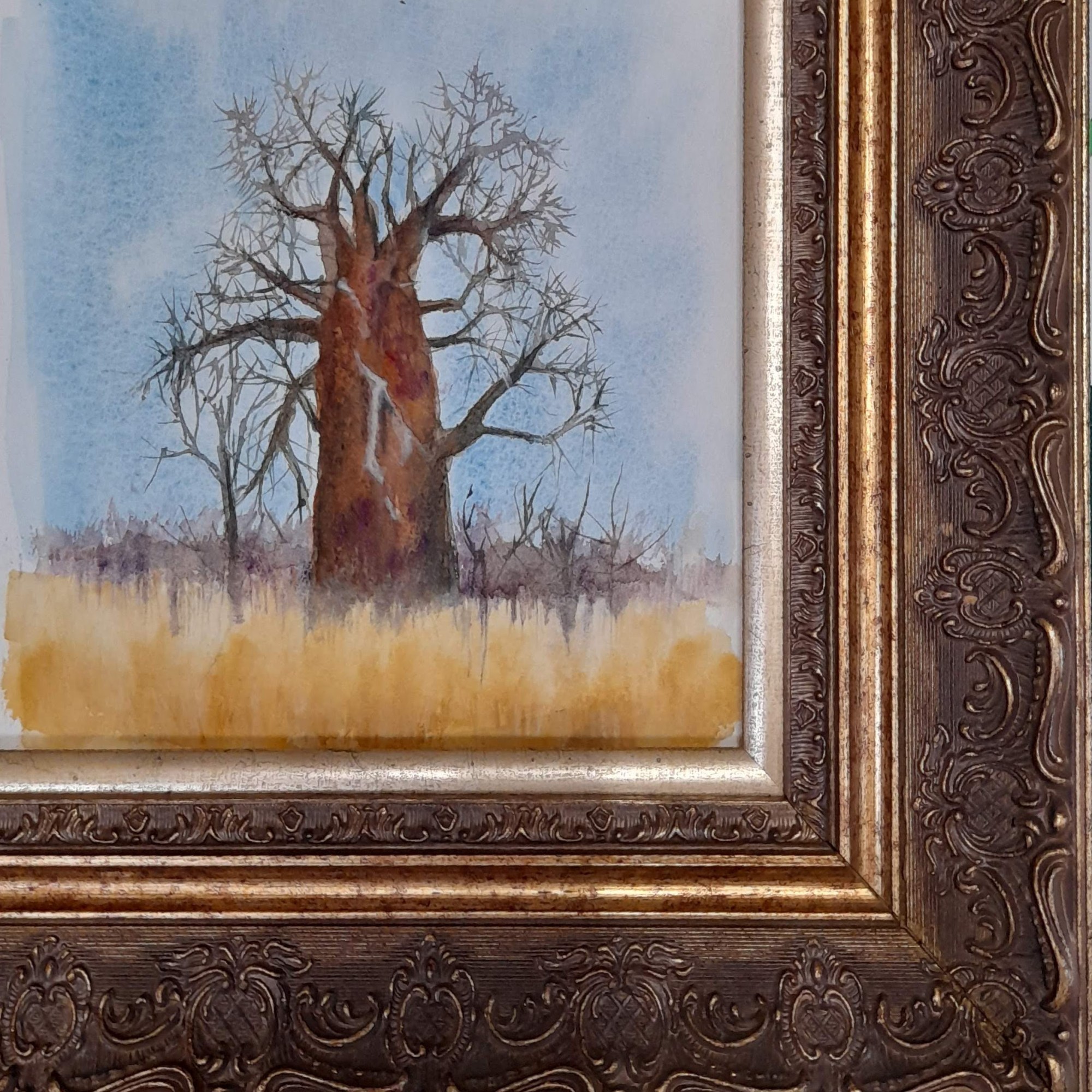
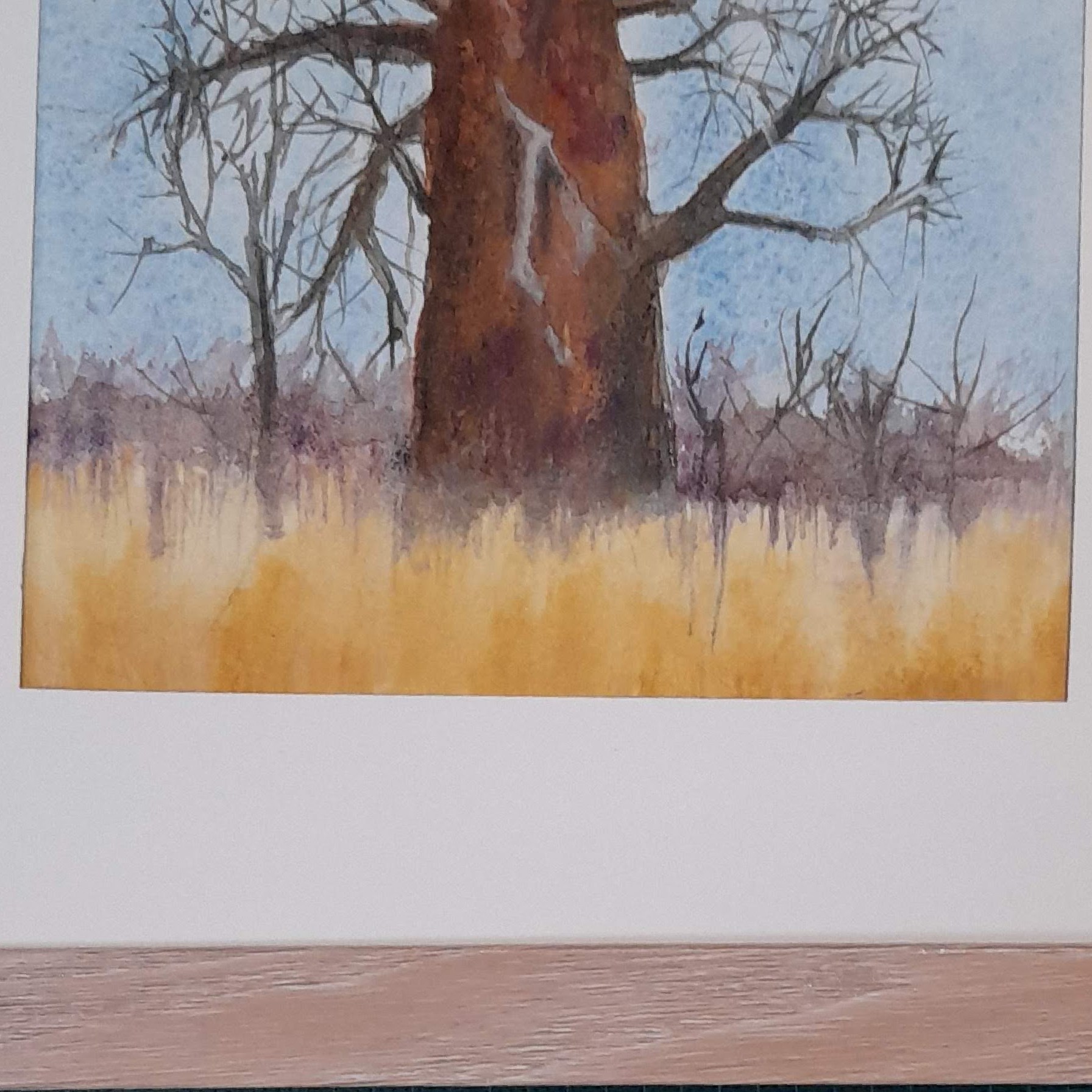
For an artist, finishing a picture is not the end of the story. For the painting, it is just the beginning of a life that is separate from its creator. Is it going to languish in deep piles with other not quite perfect paintings, or will it get a chance to shine, find a forever home?
The difference often lies in the framing – how the work is presented can make or break a sale. I know this first hand as a buyer and as a seller of art. I did a painting many years ago of a humble vegetable, the aubergine, and the purply colour was rich and dark and as juicy as a watercolour can be. I was pleased and had it framed in the expectation of a quick sale – who could resist?
There it hung on the Gallery Ann wall amongst less colourful and noticeable paintings for more than six months and finally I caved in, on the advice of the gallery owner and got it reframed. Voila, it was gone in a week and barely covered the cost of two frames and commission. However, it was a sale! Somebody loved it and wanted it to enhance their home and enrich their life. (I assume people buy paintings for the same reason I do – do not burst my bubble!)
Likewise, a painting of daisies I barely glanced at every day I hung out at the gallery was one day reframed, and I couldn’t keep my eyes off it. I don’t think I’d ever bought a painting before – not at that price! I bit the bullet and told David about this painting I had to have, trying to justify the expense and the indulgence. He wrote out a cheque and I got the painting – I love it. And I have reused the frame often for my own work and reframed it again and again.
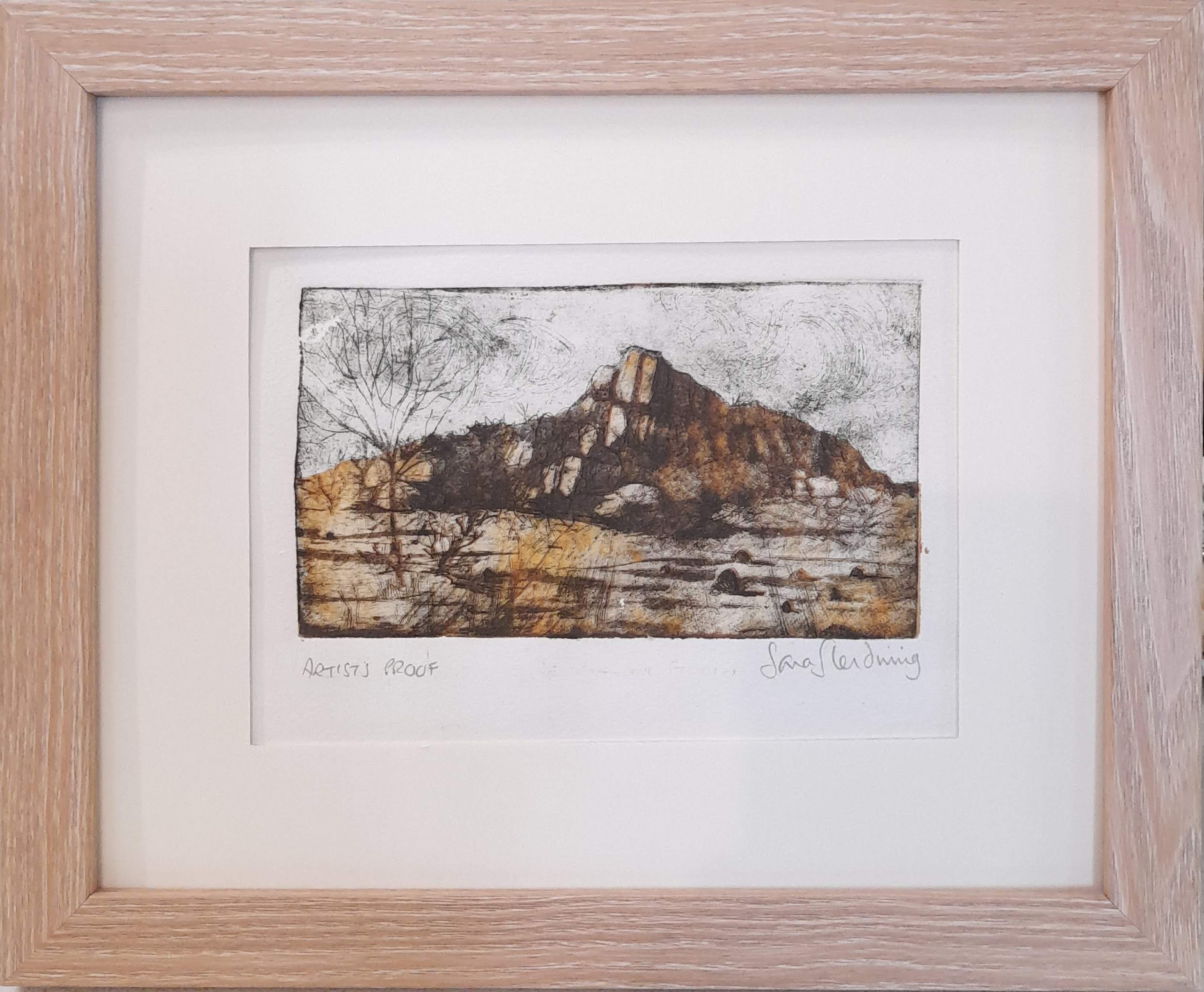
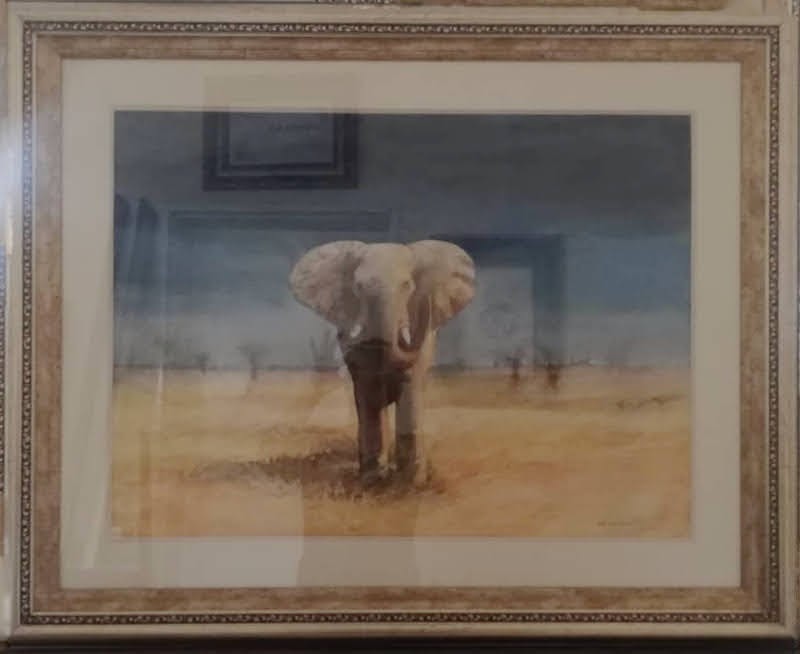
My own tastes run to classic, german gold, deep frames for everything, and with clear glass and double mounts for watercolours – $$$$. When framing for a potential sale the cost has to be recovered so it can be a big gamble – however the painting must be presented well and the frame is to show it off, not to upstage. In the end, personal taste and pocket drive the choices we make and as long as the artwork is the star of the show, anything goes.
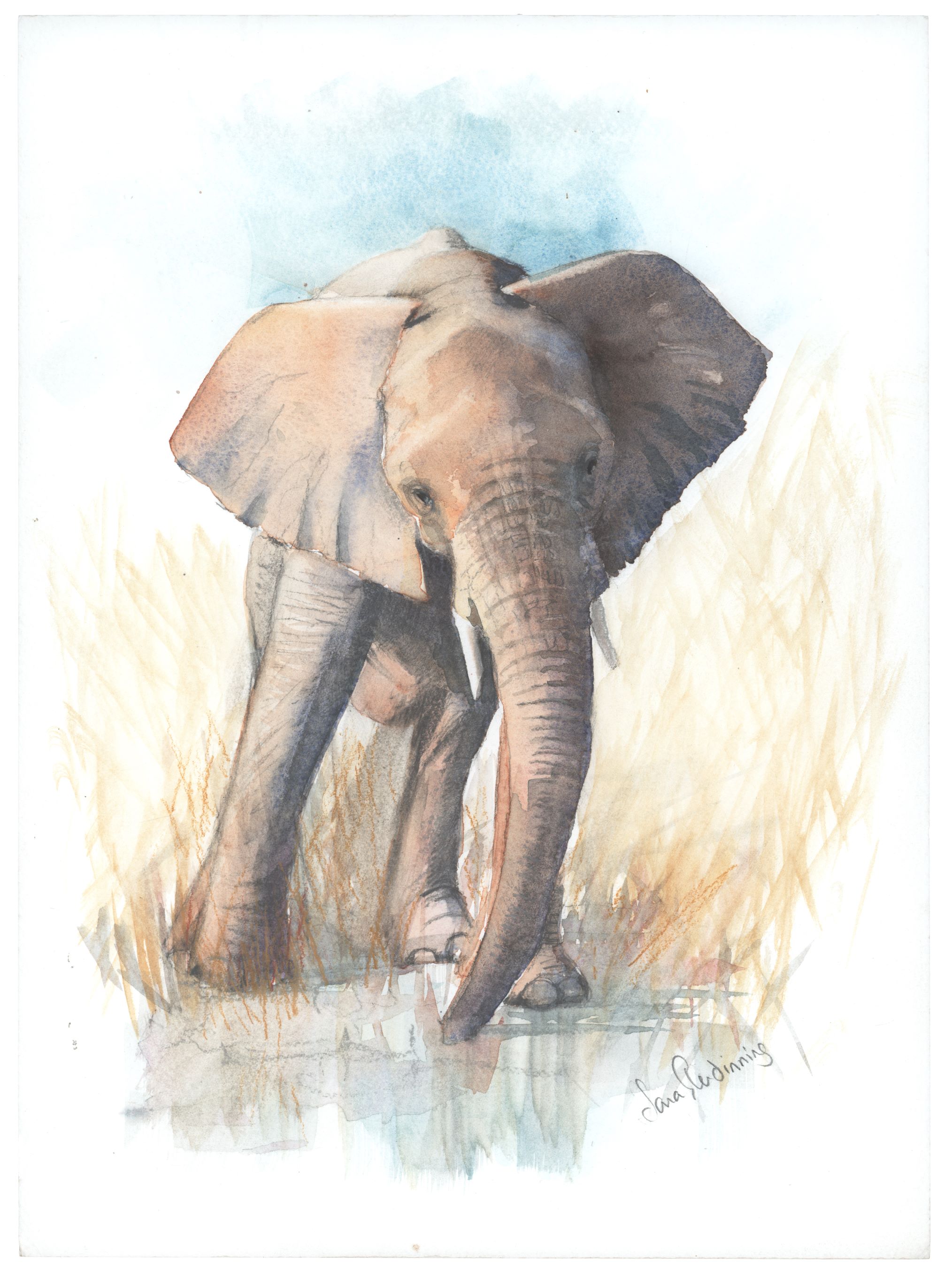
Double frame and mounts for my big ele.That’s better for viewing online but it looks fabulous in the frame!

 Sara Glendinning